
How technology changes commerce.
I research AI Commerce, digital transformation, and the systems shaping how products are discovered, evaluated, and bought.
I've spent more than 20 years working across ecommerce, merchandising, marketplaces, Amazon, digital commerce, and technology. This site is where I document what I'm learning about how AI and other technological shifts are changing commerce, and what operators need to understand before the shift becomes obvious.

What I'm exploring
The questions I keep returning to as technology reshapes how commerce works, and how the pieces connect across disciplines.
AI Commerce
How AI is reshaping the way products get discovered, evaluated, and bought across marketplaces and retail. Rufus, Sparky, ChatGPT, and the agentic surfaces are the current front line.
Product Discovery
How shoppers, and increasingly their agents, actually find products. What surfaces a listing, what gets skipped, and how discovery is shifting from search boxes to conversations.
Digital Transformation
How commerce operations, tooling, and data systems evolve when technology moves faster than the org chart. What it takes for teams to keep up without simply adding headcount.
Search, GEO, and AI Recommendations
How search is moving from keyword ranking to AI recommendation. Generative Engine Optimization, Agentic Engine Optimization, and what decides whether an engine cites or recommends you.
AI Commerce 2027
How the commerce operating model changes when software can act: nine shifts, the evidence behind them, and what remains unproven. Updated through 2027 as evidence arrives.

Recent research
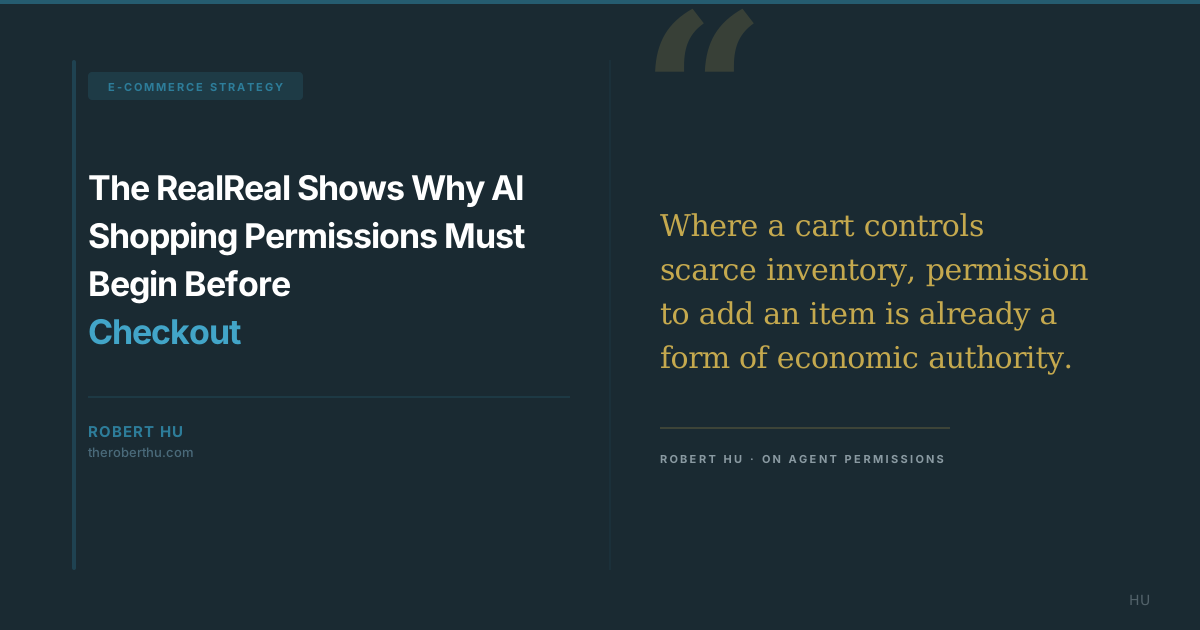
The RealReal Shows Why AI Shopping Permissions Must Begin Before Checkout
In a test reported by The Verge, Meta's Muse kept renewing The RealReal's 20-minute cart holds on one-of-one listings without buying anything. The RealReal then made it harder for agents to log in, add to cart and check out, while still letting them surface listings. Add-to-cart can already be economic authority.
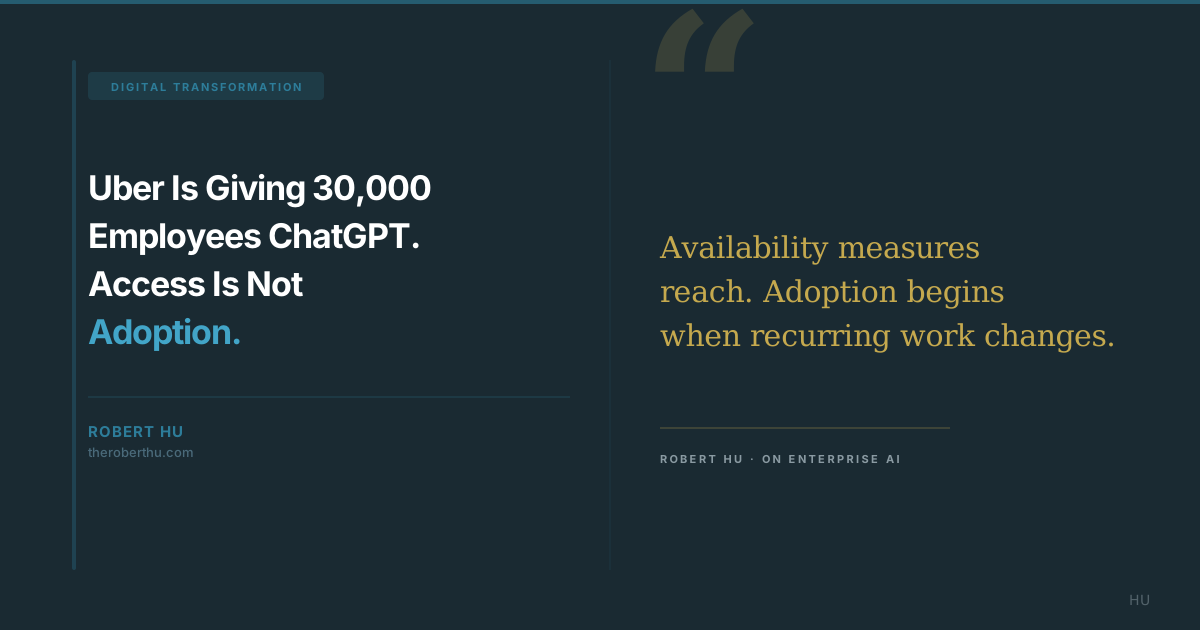
Uber Is Giving 30,000 Employees ChatGPT. Access Is Not Adoption.
Uber is making ChatGPT Work available to more than 30,000 employees, expanding from a 1,000-person pilot. Availability measures reach, not adoption. Uber and OpenAI have published no adoption or outcome figures yet, and the company's own agent infrastructure shows what the later stages require.
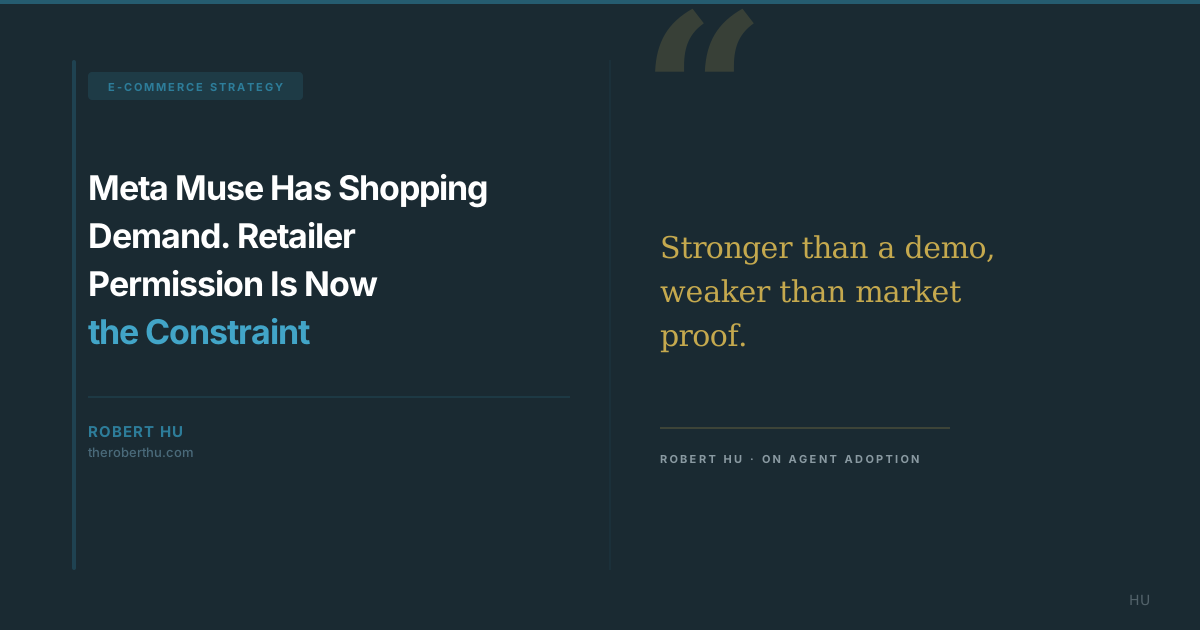
Meta Muse Has Shopping Demand. Retailer Permission Is Now the Constraint
Meta says more than 10 million people in the US and Canada set up Muse in about six weeks, and that shopping is its most common use, with an average purchase above $200 including travel. The figures are stronger than a demo and weaker than market proof, and Meta's own CFO named retailer permission as the constraint.
This is not an AI news site. It is a public notebook for understanding how technology changes commerce. The goal is to compound knowledge, connect ideas across disciplines, and document the questions, experiments, and patterns that help operators make better decisions.