
Research Notebook
How technology is changing commerce, and what operators need to understand before the shift becomes obvious.
Albertsons' AI Results Suggest the Real Value Is in Planning, Not Search
Albertsons reported a 10% average order value lift from conversational search and about 26% from its more comprehensive assistants. The interesting part is the distance between them, and the most likely explanation has less to do with the AI than with how much of the customer's job it was asked to finish.
Kroger's Ecommerce Reset Is Becoming an Operating Model
Nate Faust's appointment is the latest step in an eighteen-month sequence, not the first. Kroger has built a dedicated ecommerce unit, reset fulfillment toward stores, expanded delivery partnerships, and reached ecommerce profitability including media. The remaining question is whether those parts operate as one system.
Retailers Want AI Shopping Traffic. They Do Not Want to Lose the Customer.
AI assistants send retailers high-intent shoppers who have already described a need, weighed alternatives, and narrowed the field. The retailer gets the order. The assistant keeps the reasoning that produced it. That separation is the real strategic question in agentic commerce.
Amazon Is Revealing the Business Model Behind AI Shopping
Amazon's Q2 disclosures moved past usage metrics. The assistant is now attached to order value, Prime signups, advertising performance, and an AWS product sold to other retailers. That combination is the strategy.
TikTok Shop Plus and the Fight to Own the Final Conversion
TikTok has proven it can create demand. A reported membership test suggests the harder problem is keeping that demand from leaking to Amazon at the moment of purchase.
Prime Day 2026 Set a Record and Shrank the Cart at the Same Time. The Brands That Won Saw It Coming.
Adobe says Prime Day 2026 hit a record $8.3 billion on day one. Numerator says the average cart shrank 16%. Both are right. Here is what the essentials-driven, smaller-basket event means for marketplace sellers, and why the reorder brands won.
83% of Marketplace Sellers Use AI. 25% Say It Hasn't Moved Anything. Here's the Gap.
The Marketplace Pulse 2026 Seller Index surveyed sellers representing $2B+ in revenue. 83% use AI. 25% report no measurable results. Amazon's Rufus made $12B. Here's why platform AI is winning and seller AI is not, and what to change.
Walmart's Q1 Earnings Revealed the Real Sparky Shift: From Discovery to Reorder
Everyone is quoting Walmart's Sparky growth numbers from Q1 earnings. The line that matters is about usage: Sparky is becoming a reorder engine for consumables, not just a discovery tool. Here is what that means for marketplace sellers.
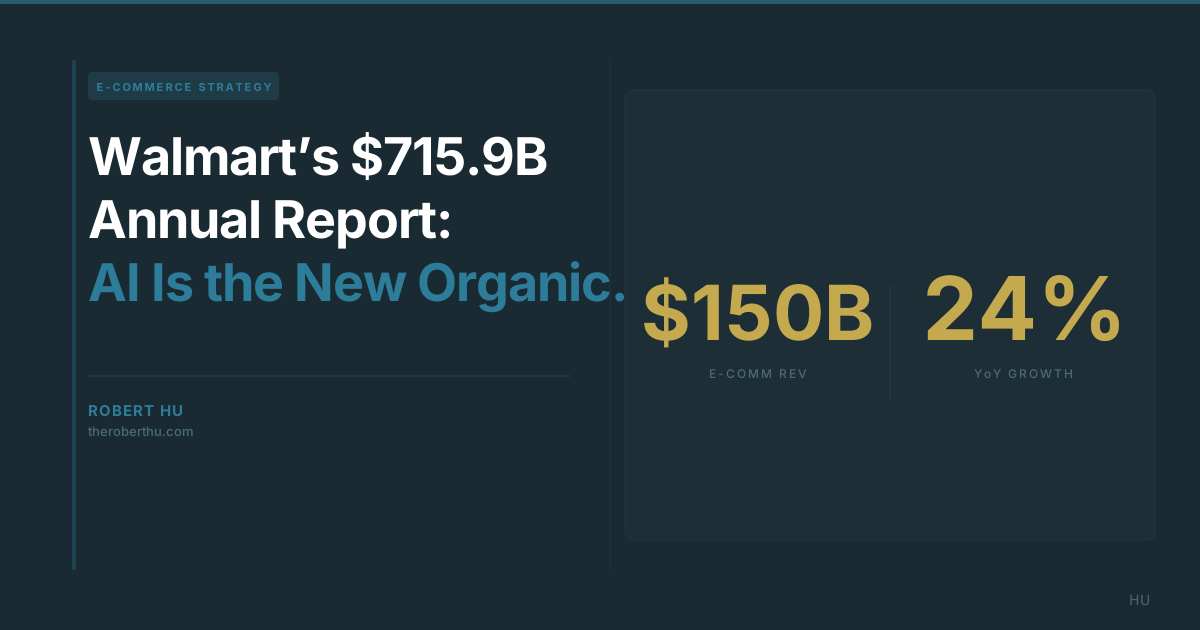
Walmart's Annual Report Just Dropped. The Buried Jefferies Line Reveals Where Walmart Marketplace Is Heading.
Walmart hit $715.9B in revenue and $150.4B in e-commerce. But the line analysts buried tells the real story: management views AI as a demand-capture tool, not a paid traffic strategy. Walmart is treating AI as the new organic.
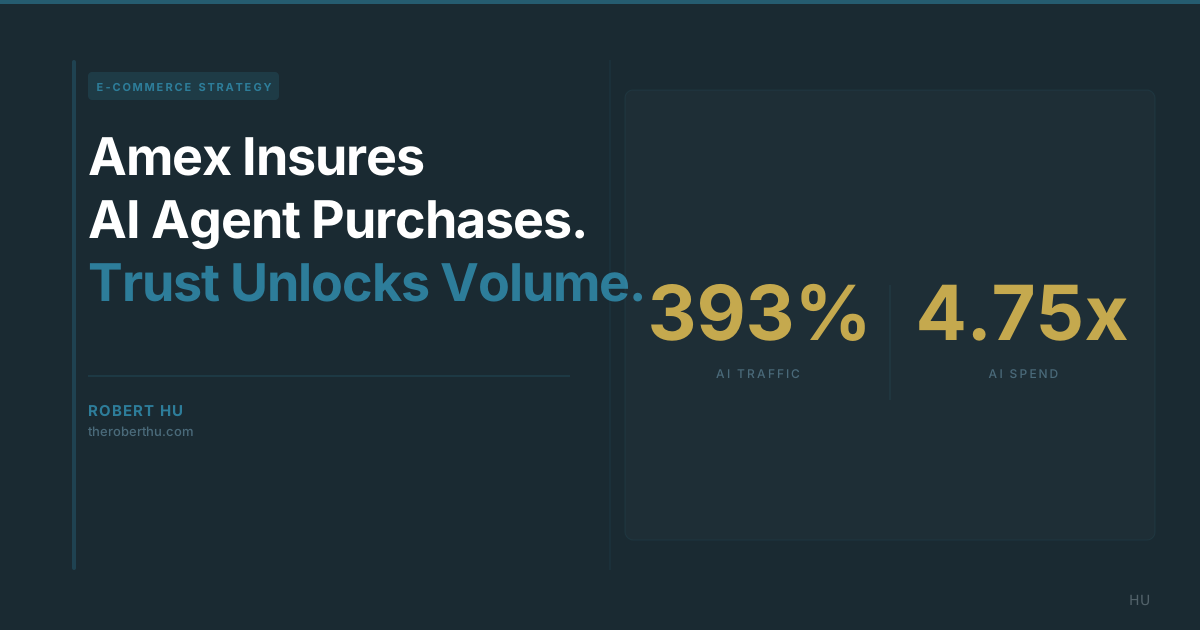
American Express Just Launched Fraud Protection for AI Agent Purchases. Here's the Signal Marketplace Sellers Shouldn't Miss.
Amex rolled out agent identity verification and protection against AI shopping errors. When a major financial institution insures agentic commerce, the category stops being experimental. Here's what marketplace sellers should do about it.
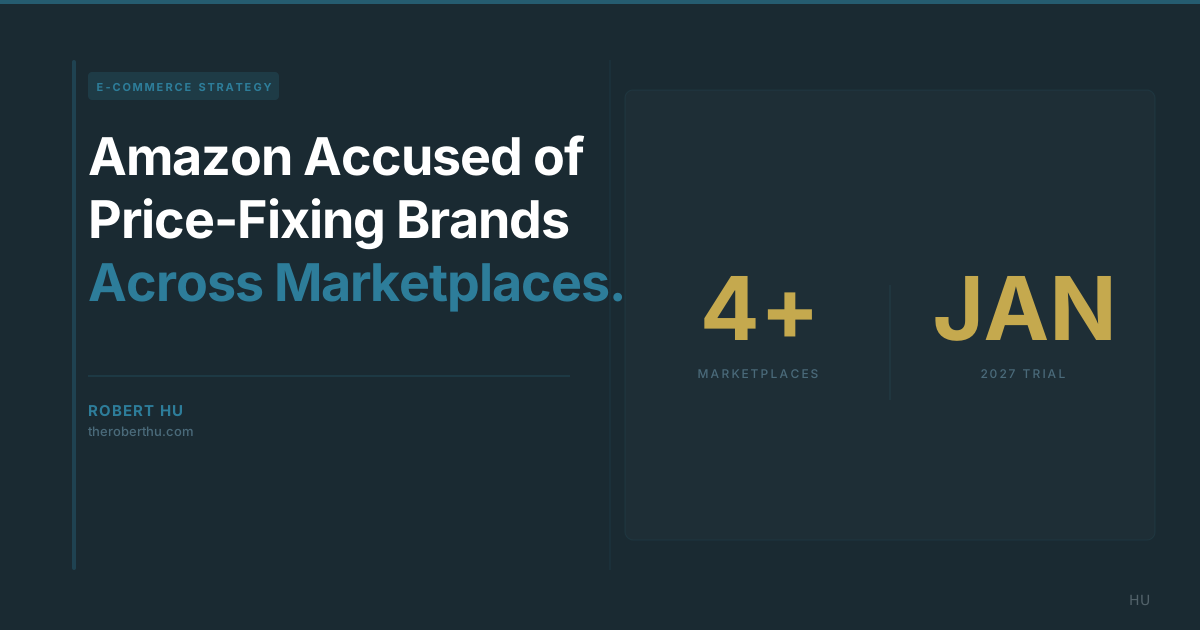
Amazon Is Accused of Coercing Brands Into Price-Fixing. Here's What It Means for Dual-Channel Sellers.
Unsealed court documents allege Amazon coerced Levi Strauss and others into pricing arrangements that raised prices on Walmart, Target, Home Depot, and Chewy. Here's what dual-channel sellers should do now.
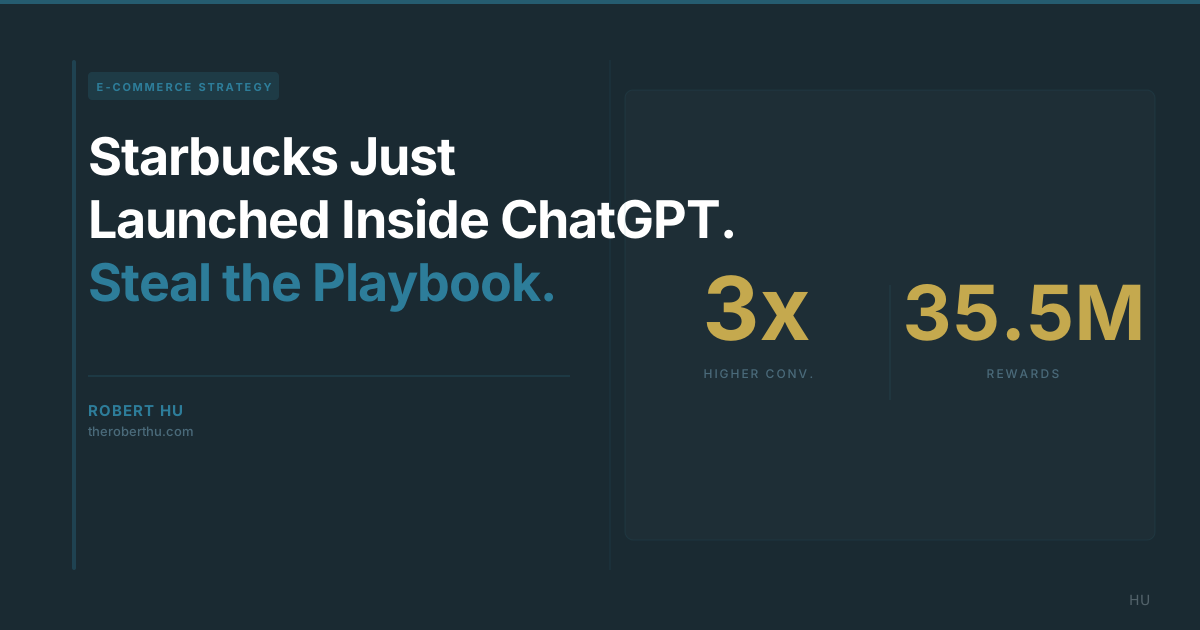
Starbucks Just Launched Inside ChatGPT. Here's the Playbook Marketplace Sellers Should Steal.
Starbucks dropped its ChatGPT app with a discovery-to-redirect flow that sidesteps Instant Checkout's failures. The architecture reveals the best path for AI commerce. Here's what Amazon and Walmart sellers should copy.