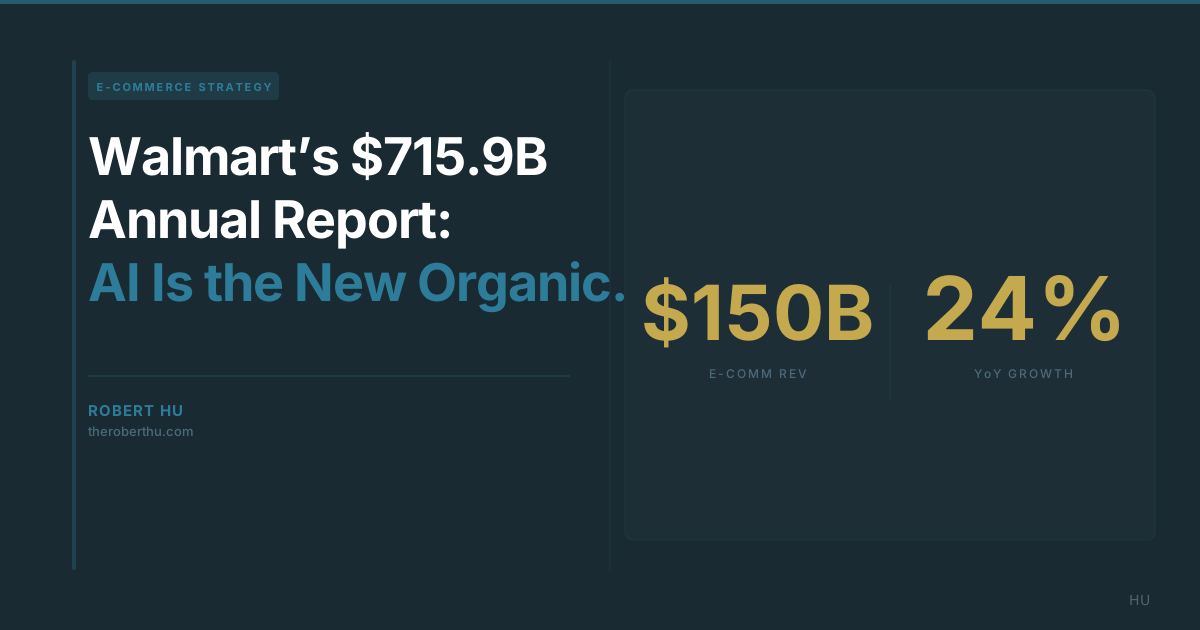
Walmart's fiscal 2026 annual report just posted record numbers. $715.9 billion in total revenue. $150.4 billion in e-commerce, up 24% year over year. E-commerce contributed 4.3% to comparable sales growth, almost double last year. Sparky now drives 35% higher baskets.
Those are the headline numbers. The line that should reshape every Walmart seller's strategy isn't in the headline. It's buried in the Jefferies analyst note: Walmart management views AI as a demand-capture and frequency tool, not a paid traffic strategy.
Read that again. Walmart, the second largest retailer in the world, is telling investors that AI isn't an advertising surface. It's how customers will discover, reorder, and develop habits with Walmart.
Key Takeaways
- $150.4B in e-commerce revenue for Walmart's fiscal 2026, up 24%. E-commerce is now driving more than 4% of comparable sales growth on its own.
- 35% higher baskets via Sparky compared to non-Sparky shoppers. AI is materially lifting AOV at Walmart scale.
- "Demand-capture and frequency tool, not paid traffic strategy" is how Jefferies summarized Walmart's framing of AI. That single line is the organic vs. paid signal.
- GEO is the new SEO for Walmart sellers. Data quality outperforms ad budget when the platform treats AI as organic discovery.
The Headline Numbers Worth Understanding
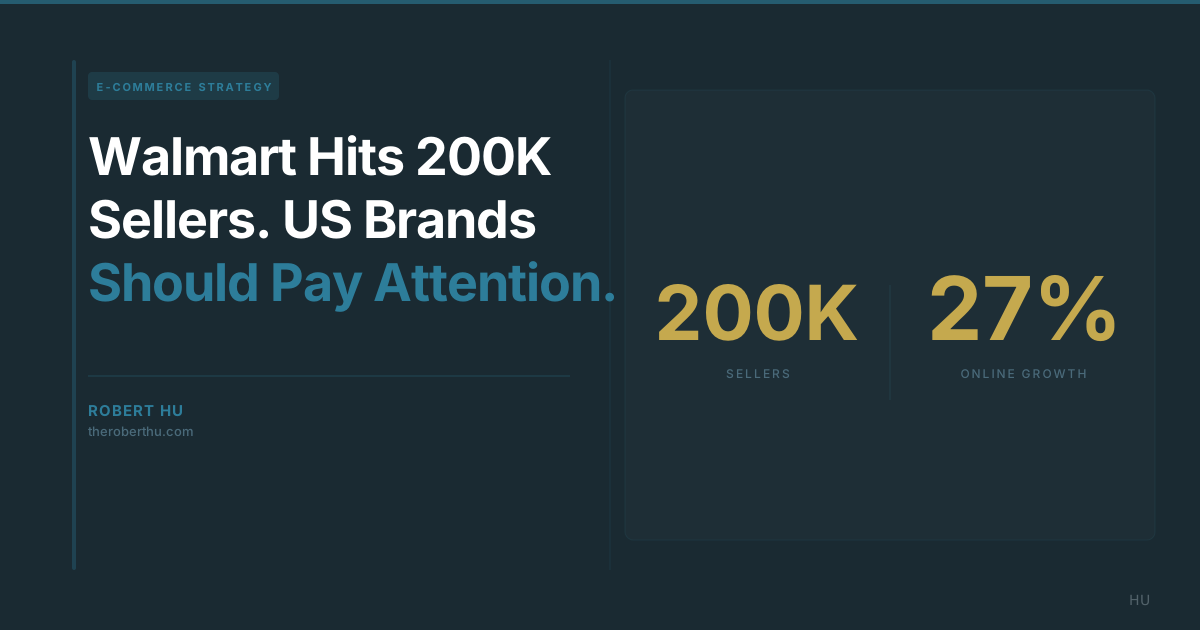
Before the buried line, you have to understand what Walmart's actual scale looks like. Total revenue: $715.9 billion. E-commerce alone: $150.4 billion, growing 24% year over year. To put that in context, $150 billion in pure e-commerce is bigger than the GDP of most countries. The marketplace passed 200,000 sellers earlier this year, and the platform is still in expansion mode rather than saturation mode.
The most important number for your strategy isn't dollars. It's that e-commerce contributed 4.3% to comparable sales growth, nearly double the prior year. That's the line that confirms Walmart's digital pivot is no longer a side project. E-commerce is now a structural driver of the parent company's growth, not a tax it pays to keep up with Amazon.
Sparky is the layer compounding on top of that growth. 35% higher AOVs from Sparky users isn't a one-time pop. It's a sustained lift across enough sessions to show up in the annual report.
Newsletter
Follow the research
Research notes and analysis on how AI, digital transformation, product discovery, and customer behavior are changing commerce.
Subscribe to Hu's Weekly HootThe Buried Line That Changes Everything
Inside the Jefferies analyst note covering the annual report, one sentence stands out: Walmart management views AI as a demand-capture and frequency tool, not a paid traffic strategy.
That sentence wasn't in the press release. It wasn't in the CEO's letter. It was extracted from analyst conversations and buried 14 paragraphs into a research note. Most sellers will skim past it without realizing it's the most consequential line in the report.
"Demand-capture and frequency tool" is corporate-speak for organic discovery and habit formation. Walmart isn't framing Sparky as the next ad surface to monetize. They're framing Sparky as the way customers will find products, reorder essentials, and stay inside Walmart's ecosystem rather than wandering to Amazon, Target, or DTC.
"Not a paid traffic strategy" is the part that should make every Walmart seller pay attention. If Walmart isn't planning to monetize Sparky primarily through ads, then the brands that win Sparky recommendations won't be the ones with the biggest Walmart Connect budgets. They'll be the ones whose product data Sparky can confidently match to a customer's stated need.
What Does "Demand-Capture and Frequency Tool" Actually Mean?
Three things. Each one rewards a different kind of seller behavior:
1. Demand-capture means converting intent into purchases inside Walmart. When a customer asks Sparky for a recommendation, Walmart wants the answer to come from Walmart's catalog. The customer should never need to leave to find a comparable product elsewhere. For sellers, this means Walmart will surface products that match shopper intent specifically, not products that paid the most for placement.
2. Frequency means turning one-time buyers into repeat buyers. Sparky is the layer that helps a customer reorder, replenish, and discover adjacent products in their preferred categories. The brands that get recommended for "buy again" or "you might also like" prompts compound their order frequency. That's lifetime value, not a single-conversion ad metric.
3. Habit formation means owning the discovery surface. Walmart wants Sparky to be where customers go first when they need something. If Sparky is good enough to consistently surface the right product, customers stop opening Amazon to compare. That's a strategic moat that no ad budget can buy.
Why This Changes Walmart Marketplace Strategy
Most marketplace sellers approach Walmart the same way they approach Amazon: bid more, win more visibility. That model breaks when the platform's primary growth surface is treated as organic.
If Sparky is the new front door for Walmart shoppers, and Sparky pulls from product data quality rather than ad spend, then your Walmart strategy needs to invert. You still run ads. But the ads compound on top of organic AI visibility, not as a substitute for it.
Robert Hu has been telling brands this for the past year, and the Walmart annual report just made it explicit. Generative Engine Optimization isn't a nice-to-have on Walmart. It's the new organic strategy. The brands that build clean, structured product data win the demand-capture moment when a customer asks Sparky for a recommendation.
The Pivotal Framing from John Furner
John Furner, Walmart US CEO, said in the report that the company is at a pivotal moment in retail. The framing is deliberate. Walmart isn't just reporting numbers. They're telling investors and the industry that the next decade of retail will be won at the AI discovery layer, not at the shelf or at the search bar.
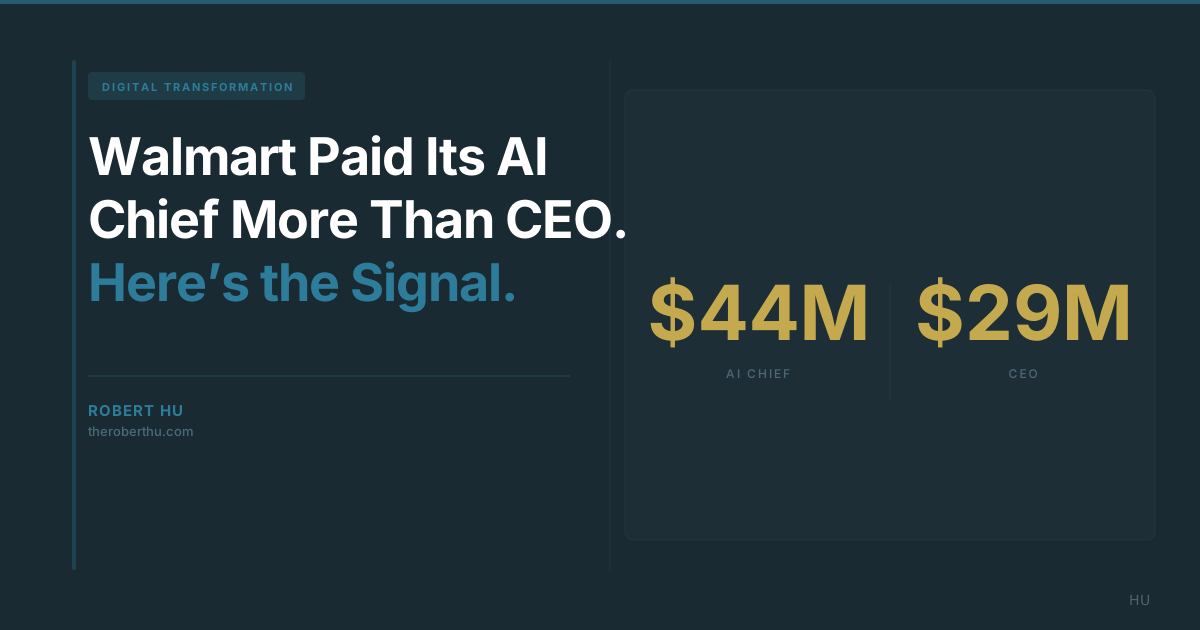
That framing matches what we've seen Walmart do over the past 12 months. They paid Daniel Danker, their AI EVP, $44 million in 2025, more than CEO Doug McMillon's $29 million. They integrated Sparky into ChatGPT and Gemini. They co-developed the Universal Commerce Protocol with Google. They are publicly betting their next phase of growth on AI infrastructure that doesn't depend on Walmart Connect ad revenue to scale.
What Should Walmart Sellers Audit This Quarter?
Five concrete things, in priority order:
1. Persona clarity in titles and bullets. Sparky needs to know who your product is for. "Best gardening gloves for arthritic hands" is a match. "Premium gardening gloves" is a generic that gets skipped.
2. Use-case language across A+ content. When a customer asks Sparky "what should I use for spring planting," your A+ should mention spring, planting, and the specific scenarios where your product helps.
3. Backend attribute completeness. Material, dimensions, age range, dietary attributes. Every empty field is a missed filter when Sparky narrows down the recommendation set.
4. Cross-platform consistency. Your Walmart, Amazon, and DTC product descriptions should align. Inconsistencies create ambiguity, and Sparky deprioritizes ambiguous brands.
5. Review quality reinforcing use cases. Reviews that mention specific use cases ("perfect for my arthritic hands") feed back into AI confidence. Customer experience operations matter for AI visibility, not just for ratings.
How Does This Compare to Amazon?
Amazon's playbook still leans heavily on advertising. Sponsored Products, Sponsored Brands, and the eventual monetization of Rufus are all ad-driven. Walmart Connect is growing fast too, but Walmart's annual report explicitly frames AI as a customer experience and frequency lever, not primarily an ad surface.
That's a strategic divergence. The brands that win on Amazon will optimize listings AND ad spend. The brands that win on Walmart will optimize listings first, with ads as an amplifier on top of organic AI visibility.
For dual-channel sellers, the implication is clear. Run two playbooks. Don't assume what works on Amazon will work on Walmart. The platforms are now publicly committed to different growth models, and your operational approach should reflect that.
The Bigger Picture
The Walmart annual report is the kind of document most marketplace sellers skim, looking for the headline revenue number and moving on. The Jefferies note is the kind of analysis even fewer read. But the buried line about AI as demand-capture rather than paid traffic is the most actionable seller intelligence to come out of any retailer earnings report this quarter.
Walmart is treating AI as the new organic. That makes GEO the new SEO. And right now most marketplace sellers are still optimizing for the old model. The brands that pivot before Q4 will compound their visibility against competitors who are still buying clicks they could have earned with better data.
If you want help auditing your Walmart listings for AI-driven discovery before Q4 traffic hits, book a free strategy session and we'll walk through your top SKUs together.