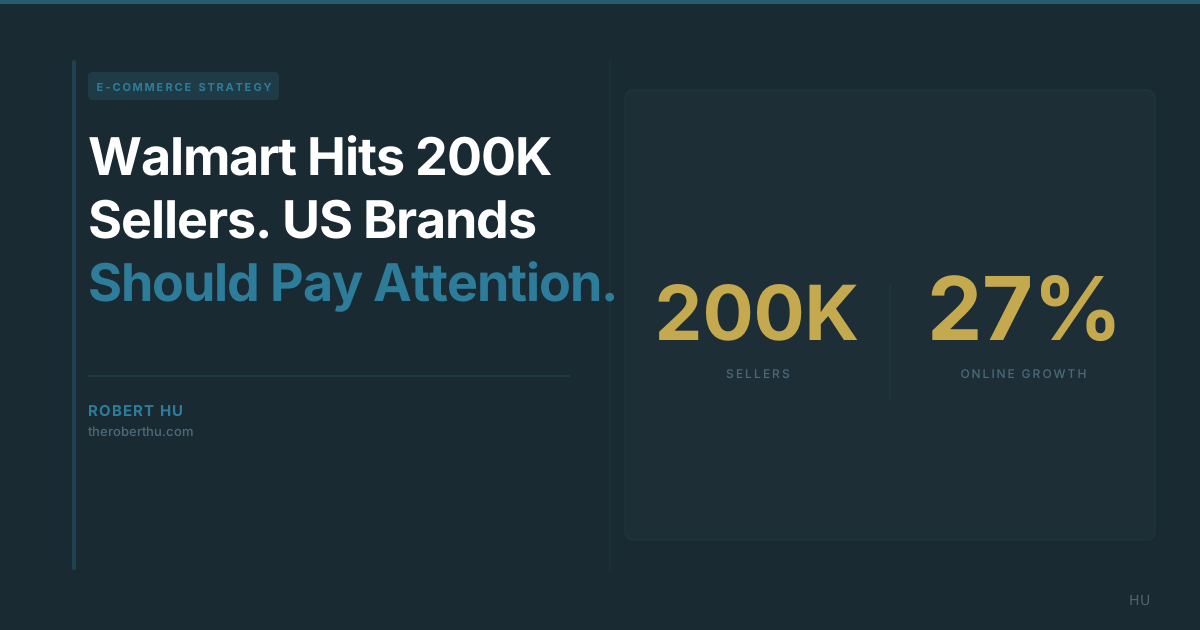
Walmart's marketplace just crossed 200,000 sellers. Roughly 60% of new sellers are coming from China. On the surface, that sounds like bad news for US brand owners. More competition, more price pressure, more noise.
It's actually the opposite. If you're a US brand doing $100K to $2M and you've been watching Walmart from the sidelines, the math just tipped in your favor.
Key Takeaways
- 200,000 sellers on Walmart Marketplace with roughly 60% of new sellers from China, but Walmart is actively incentivizing US brands with fee discounts and better placement.
- 27% online sales growth for Walmart last quarter, making it one of the fastest-growing e-commerce channels for US sellers.
- 35% higher average order values from Walmart's AI assistant Sparky, showing the platform is investing heavily in conversion, not just traffic.
- Lower saturation than Amazon in most categories for quality US brands, creating a window for early movers to lock in positioning.
The 200K Milestone: Volume Play vs. Value Play
Walmart has been aggressively expanding its third-party marketplace since 2020. Crossing 200,000 sellers is significant, but the composition matters more than the number.
The majority of new sellers are cross-border, primarily from China. They're bringing high volume, low-price inventory to the platform. Walmart wants this. It fills out their long-tail catalog, improves search coverage, and gives customers more choices. This is the volume play.
But Walmart's core customer is not optimizing for the cheapest option. Walmart shoppers are value-conscious, not price-obsessed. They trust domestic brands, familiar fulfillment, and consistent quality. That's why Walmart is simultaneously running a value play: incentivizing US sellers to join and stay.
The new-seller savings programs, WFS fee discounts, and search placement boosts for brands using Walmart Fulfillment Services (WFS) are not random promotions. They're Walmart's way of ensuring the marketplace doesn't become a race to the bottom.
Newsletter
Follow the research
Research notes and analysis on how AI, digital transformation, product discovery, and customer behavior are changing commerce.
Subscribe to Hu's Weekly HootWhy Should US Brand Owners Care About Walmart in 2026?
Three reasons. All of them come down to timing.
1. The growth trajectory is steep. Walmart's online sales grew 27% last quarter. For context, Amazon's marketplace is growing in the single digits in most categories. Walmart is in the phase where incremental sellers get disproportionate visibility because the platform is actively trying to fill category gaps. That window closes as density increases.
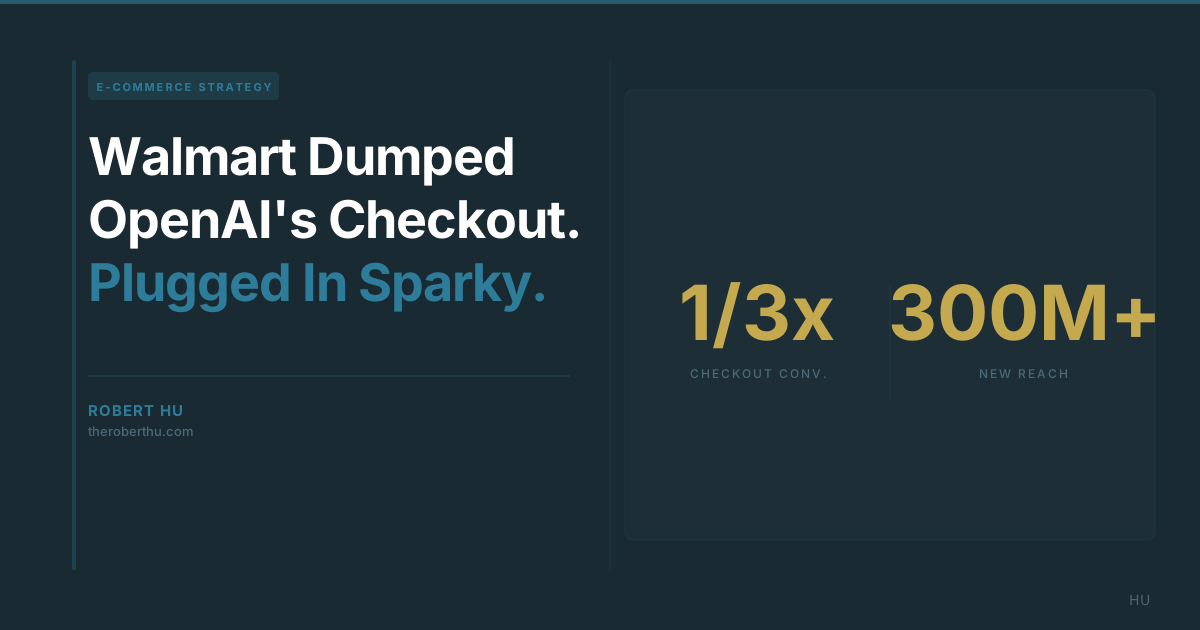
2. AI is driving conversion, not just traffic. Walmart's AI shopping assistant Sparky is driving 35% higher average order values. Sparky is now integrated into ChatGPT and Gemini, meaning customers can discover and buy Walmart products without ever visiting walmart.com directly. US brands with strong product content are better positioned for AI-driven recommendations because their listings tend to have richer data, more reviews, and clearer brand signals.
3. The competitive density is lower. On Amazon, a typical mid-market category has hundreds of sellers competing for the same keywords. On Walmart, that number is often a fraction. For a US brand with an established product line and real customer reviews, the barrier to page-one visibility on Walmart is significantly lower than on Amazon today.
How Does the Chinese Seller Wave Actually Help US Brands?
This is the part most people miss. The influx of Chinese sellers creates a dynamic where Walmart has to differentiate.
Amazon faced this years ago. Their response was to let the marketplace become a free-for-all, which led to the review manipulation, counterfeit problems, and brand registry headaches that sellers deal with today. Walmart is watching that playbook and deliberately choosing a different path.
Walmart's approach: let the cross-border sellers add catalog depth, but give US brands structural advantages. WFS sellers get the W+ tag (Walmart's version of Prime), faster delivery badges, and better organic search placement. Walmart knows that a $30 kitchen gadget from a recognizable US brand with 500 verified reviews will convert better than a $12 alternative with no reviews and a 14-day shipping window.
The Chinese seller wave gives Walmart the volume it needs to compete with Amazon's selection. But it also gives Walmart a clear reason to promote and protect domestic sellers. That tension works in your favor if you're a US brand ready to take advantage of it.
What About the Walmart vs. Amazon Decision?
This is not an either/or question. It's a sequencing question.
If you're already selling on Amazon and doing $100K to $2M, you have the infrastructure. Your product is proven. Your supply chain works. Expanding to Walmart is an incremental move, not a rebuild.
Here's what the comparison looks like right now:
- Referral fees: Walmart is competitive or lower than Amazon in most categories (8% to 15% depending on category vs. Amazon's 8% to 17%).
- Fulfillment: WFS is comparable to FBA with lower storage fees in many cases. And the W+ delivery badge is becoming a meaningful conversion driver.
- Advertising: Walmart Connect's ad platform is less mature than Amazon's, which means lower CPCs and less auction competition. Early advertisers are getting better returns per dollar.
- AI discovery: Walmart Sparky is still early, which means brands that optimize their listings for AI readability now will have a head start when Sparky handles a larger share of product discovery.
The risk of waiting is real. As Robert Hu has seen across dozens of marketplace launches, the brands that establish presence early on a growing platform lock in organic rankings, accumulate reviews, and build the content history that algorithms reward. Playing catch-up 18 months from now, after the incentives expire and competition increases, is a much harder game.
What Should You Do This Quarter?
If you're a US brand considering Walmart expansion, here are the moves that matter right now:
1. Apply to Walmart Marketplace and activate WFS. The new-seller incentives are time-limited. WFS gives you the fulfillment badges and search placement advantages that directly impact conversion. Do not list products without fulfillment infrastructure in place.
2. Optimize your top 5 to 10 SKUs for Walmart's search algorithm, not Amazon's. Walmart's search works differently. Product titles, descriptions, and attributes need to match Walmart's style guides. Copy-pasting your Amazon listings will underperform. Walmart rewards completeness, attribute accuracy, and category-specific content.
3. Structure your listings for Sparky. Walmart's AI assistant is becoming a primary discovery channel. Listings with clear, structured product data, explicit use cases, and natural-language descriptions will get recommended by Sparky. This is the same e-commerce strategy principle that applies to Amazon Rufus: AI agents surface the products they can understand best.
4. Start Walmart Connect advertising at low spend. CPCs on Walmart are still a fraction of Amazon's in most categories. A $500/month test budget on your top SKUs will give you conversion data, keyword intelligence, and campaign history that you can scale as the platform grows.
5. Monitor the incentive programs closely. Walmart is rotating new-seller promotions, WFS discounts, and category-specific bonuses. The brands paying attention to these programs are getting 10 to 20% cost advantages that directly impact margin.
The Bigger Picture
Walmart crossing 200,000 sellers is a milestone, not a ceiling. The leadership transition under the new CEO is accelerating the digital push. The AI investments through Sparky are converting browsers into buyers at higher rates. And the deliberate strategy to incentivize US brands means the platform is building for quality, not just quantity.
For US brand owners doing $100K to $2M, this is a window. The incentives are strong. The competition from quality domestic brands is still thin. And the platform is growing at 27% while actively building the AI infrastructure that will define how products get discovered for the next decade.
The brands that move now, while the math favors early movers, will lock in positioning that gets exponentially harder to earn later.