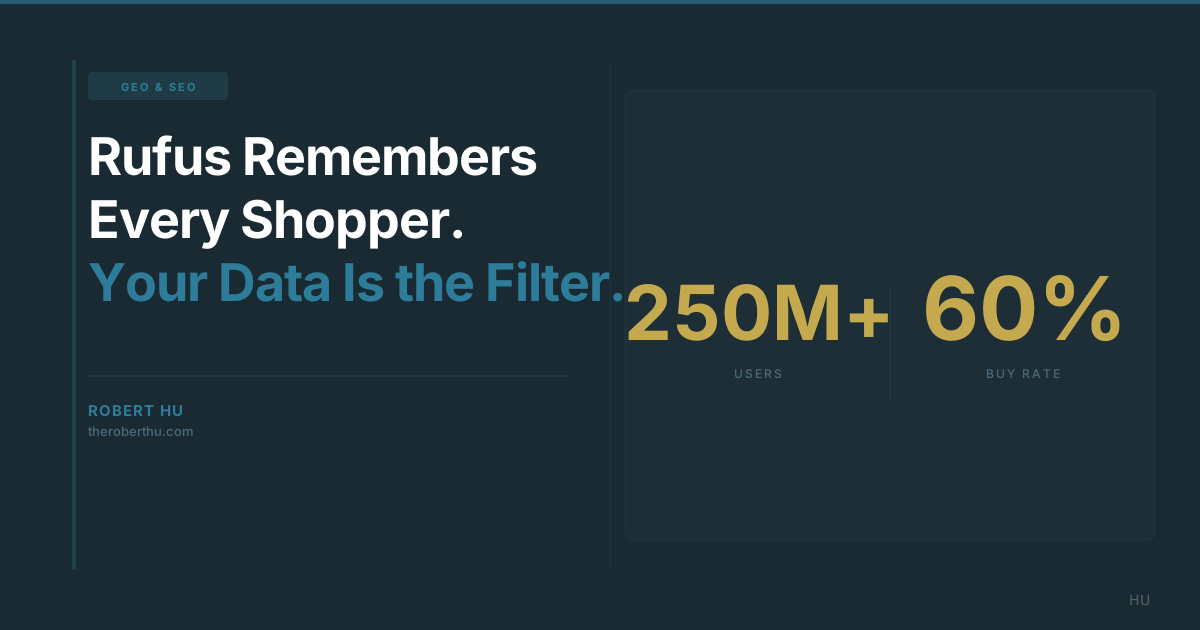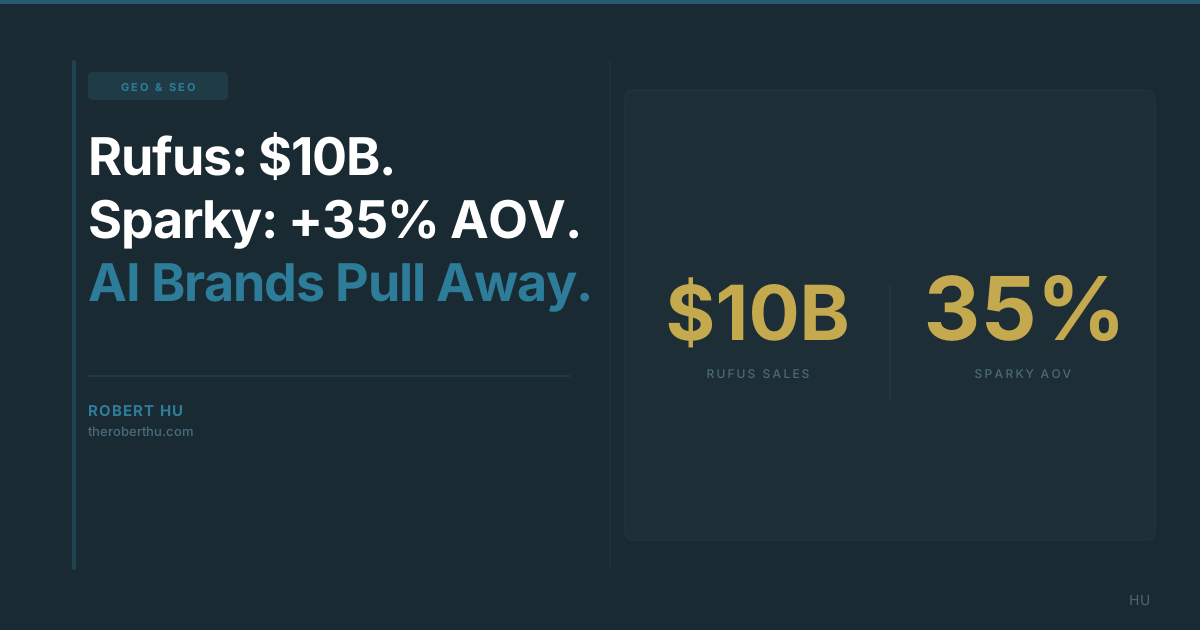
The debate about whether AI shopping assistants matter is over. Amazon said Rufus is on pace to generate $10 billion in incremental annualized sales. Customers who use Rufus are 60% more likely to complete a purchase. Walmart said Sparky users spend 35% more per order. Both platforms are telling us the same thing: AI drives real revenue, and the brands it recommends get a disproportionate share.
If you're selling on Amazon or Walmart and your listings aren't optimized for AI recommendations, you're not just missing a trend. You're missing the fastest-growing revenue channel on both platforms.
Key Takeaways
- $10 billion in incremental annualized sales attributed to Amazon Rufus, with 250M+ users and 149% year-over-year growth in monthly active users.
- 60% higher purchase likelihood during Rufus sessions, making it the highest-converting discovery channel on Amazon.
- 35% higher average order values from Walmart Sparky users compared to standard search shoppers.
- Only 8% of Amazon listings have enough structured data for AI to personalize a recommendation. 92% of sellers are invisible to this channel.
For the full optimization guide, see the Walmart Sparky cluster page.
Why Do AI Recommendations Create a Winner-Take-Most Dynamic?
Traditional Amazon search shows you a page of 48 products. Sponsored results take the first row, organic results fill the rest. A shopper scans, compares, clicks through a few listings, and picks one. Every product on that page gets at least a chance at attention.
AI recommendations don't work that way. When a shopper asks Rufus "what's the best protein powder for runners over 40," Rufus doesn't return 48 results. It returns 3 to 5 specific products with explanations for why each one fits the query. The shopper reads the AI's reasoning, picks one, and buys. The other 200 products in the category never enter the conversation.
This is the structural shift. Traditional search distributes attention across many products. AI concentrates it on a few. If you're in the shortlist, you get an outsized share of high-intent traffic. If you're not, you get nothing from that channel. There's no middle ground.
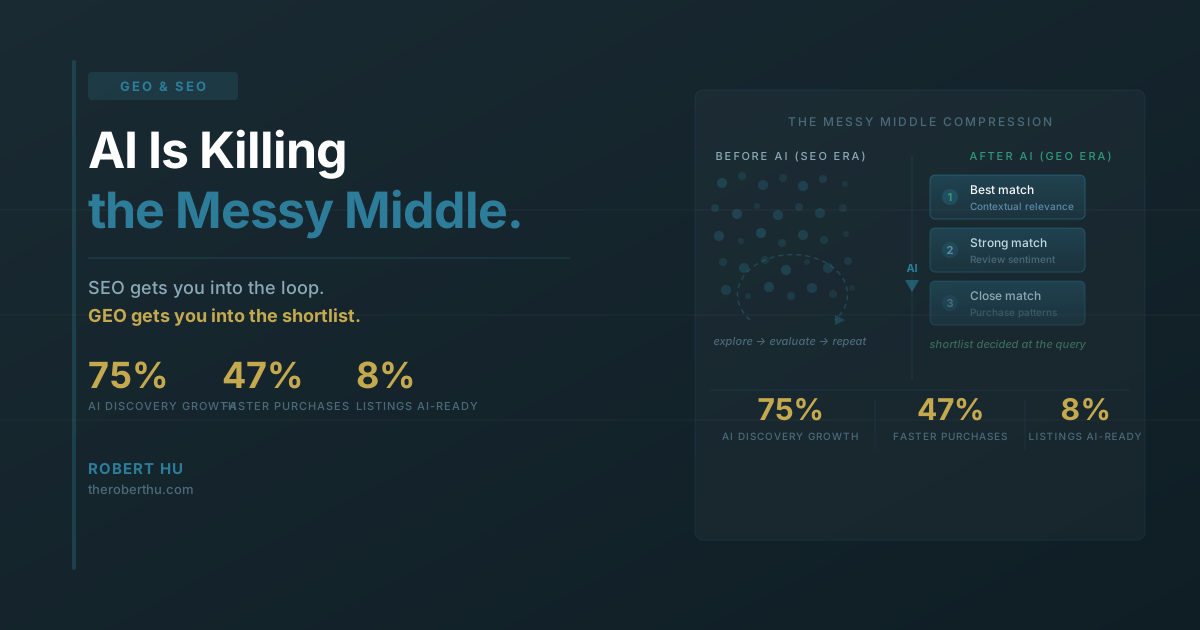
This is the same dynamic Robert Hu described in the messy middle compression: AI is eliminating the browsing and comparison phase that used to give every product a shot. The brands AI recommends capture the purchase. Everyone else competes for what's left.
Newsletter
Follow the research
Research notes and analysis on how AI, digital transformation, product discovery, and customer behavior are changing commerce.
Subscribe to Hu's Weekly HootWhat Does "Only 8% Are AI-Ready" Actually Mean?
This is the stat that should get every seller's attention. Only about 8% of Amazon listings have enough structured data for AI to personalize a recommendation. The other 92% are effectively invisible to Rufus.
Here's what "AI-ready" means in practice. Rufus needs to answer conversational queries like "what's a good gift for a 7-year-old who likes dinosaurs" or "I need a moisturizer for dry skin that doesn't feel greasy." To match your product against queries like these, Rufus needs your listing to explicitly state:
- Who the product is for (age range, skin type, skill level, lifestyle)
- When and how to use it (morning, post-workout, weekly, seasonal)
- Where it works best (home, gym, outdoors, office, travel)
- Why it solves a specific problem (not just features, but the outcome)
Most listings only answer "what is this product?" They describe the item. They list features. They stuff keywords. But they don't give AI the contextual data it needs to match the product to a specific person with a specific need at a specific moment.
That's why 92% of listings are invisible to AI. Not because the products are bad. Because the data is incomplete.
What Do AI-Ready Listings Actually Look Like?
This is the GEO framework in practice. Here's the difference between a listing Rufus skips and one it recommends:
Generic listing (invisible to AI): "Premium yoga mat, non-slip, eco-friendly, 6mm thick, multiple colors available. Great for all yoga styles. Durable and easy to clean."
AI-ready listing: "Extra-thick 8mm yoga mat designed for beginners and joint-sensitive practitioners. Non-slip textured surface for stability in standing poses. 72 inches long for taller users. Best for home practice on hard floors. Includes alignment guides printed on the mat for self-guided sessions."
The second listing gives AI five dimensions to match against:
- WHO: Beginners, joint-sensitive, taller users
- WHEN: Self-guided sessions
- WHERE: Home practice on hard floors
- WHY: Joint protection, stability, self-guided learning
- WHAT: 8mm thick, 72 inches, alignment guides, non-slip texture
When a shopper tells Rufus "I'm new to yoga and my knees hurt on my tile floor," the second listing is a clear match. The first listing could be anything. Rufus can't tell if it's appropriate for a beginner, if it's thick enough for hard floors, or if it helps with joint issues. So Rufus skips it.
Revenue from AI surfaces compounds for the brands with the cleanest product data. The 6-dimension GEO framework is how to audit your own listings against the way Rufus and Sparky actually evaluate. See the framework →
How Does the Compound Effect Work?
AI recommendations create a flywheel. Here's how it works and why early movers pull further ahead over time:
Step 1: AI recommends your product. Because your listing has the structured data Rufus or Sparky needs, you show up in the shortlist of 3 to 5 products for relevant queries.
Step 2: Conversion goes up. The shopper who finds you through AI was already high-intent (60% more likely to purchase, remember). They buy. Your conversion rate climbs.
Step 3: Reviews increase. More sales means more reviews. More reviews means richer sentiment data for AI to analyze. Rufus reads and synthesizes review text. Reviews that mention specific use cases ("perfect for my arthritic hands," "great for our 5-year-old") reinforce persona relevance.
Step 4: AI recommends you more. Higher conversion, more reviews, stronger sentiment signals. Rufus now has even more confidence in recommending your product. You show up in more queries, to more specific personas.
This is why the gap between AI-optimized and everyone else compounds. The brands that are recommended today build the data that gets them recommended more tomorrow. The brands that aren't recommended today accumulate nothing.
On Walmart, the same flywheel runs through Sparky's 35% higher AOV channel. Higher order values mean higher revenue per customer, which funds better inventory, better content, and better reviews. The cycle reinforces itself.
What Should You Do This Week?
If you're selling on Amazon, Walmart, or both, here are the five moves that matter right now:
1. Pull up your top 5 listings and score them against the WHO/WHEN/WHERE/WHY framework. For each listing, ask: can an AI crawler find a clear answer to who this product is for, when they should use it, where it works best, and why it solves their specific problem? If any dimension is missing, that's your first fix.
2. Check your backend attributes for completeness. Open Seller Central (or Walmart Seller Center) and look at every attribute field for your top products. Age range, material, dietary attributes, compatibility, certifications. Every empty field is a missed match. Fill them all.
3. Rewrite your top 3 bullet points as answers to real questions. Go to your Q&A section. Look at what shoppers actually ask. Then rewrite your bullets to answer those questions directly. "Is this safe for sensitive skin?" should be answered in a bullet, not left for a stranger in Q&A.
4. Add use-case context to your A+ content. Your A+ modules should describe specific scenarios, not generic lifestyle images. "Apply after your morning workout to reduce soreness" gives AI a clear use-case anchor. A stock photo of someone smiling gives AI nothing.
5. Test your listings in AI. Ask Rufus (on the Amazon app) and ChatGPT about your product category. "What's the best [your category] for [your target customer]?" If your product doesn't show up, your listing isn't AI-ready. If a competitor shows up, read their listing and figure out what they're doing that you're not. Product listing optimization starts with knowing where you stand.
The Bigger Picture
$10 billion on Amazon. 35% higher AOVs on Walmart. These aren't projections. They're current performance numbers from the platforms themselves. AI shopping assistants are driving measurable revenue today, and the brands they recommend are capturing a disproportionate share of it.
The window is still open because 92% of listings haven't adapted yet. But that window is closing. Every quarter, more sellers figure this out. Every Rufus update raises the bar for what "optimized" means. The brands that move now, while the competition is still writing 2022-era listings, will lock in a compound advantage that gets harder to reverse with each cycle.
Related reading
- Walmart Just Killed Instant Checkout. Sparky Goes Live in ChatGPT and Gemini.
The platform-side agent precedent that other retailers are now copying. - Amazon Just Joined the Agentic Commerce Governance Body It Spent 8 Months Fighting.
Amazon's agentic commerce reversal and what UCP membership signals for sellers. - GEO vs SEO: What Marketplace Sellers Need to Stop Doing in 2026
The five SEO tactics that actively hurt AI visibility, with the GEO replacements that compound across surfaces.
Find out where your brand stands across Rufus, Sparky, ChatGPT, Claude, Gemini, and Perplexity. Get a free RecoScope snapshot for an instant read.