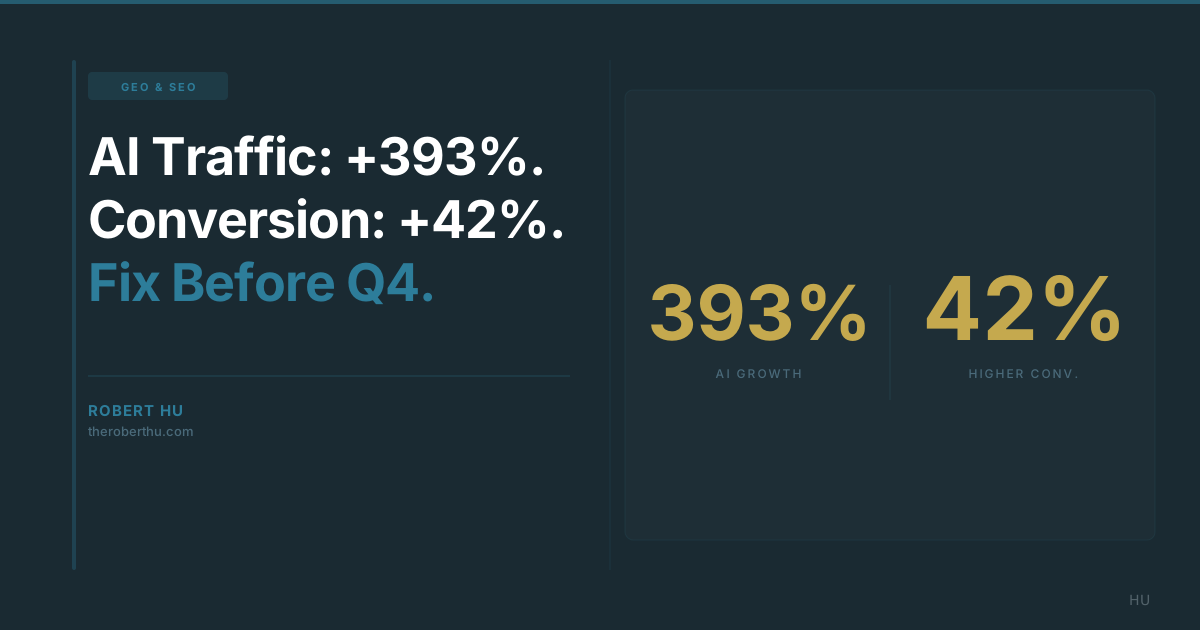
Adobe just dropped the clearest data we've seen on AI commerce. AI-driven traffic to US retail sites grew 393% year-over-year in Q1 2026. AI-referred shoppers convert 42% better than traditional channels. Twelve months ago, AI traffic converted 38% worse. That's an 80-point swing in a single year.
If you sell on Amazon, Walmart, or your own DTC site, the data is telling you two things. First, AI traffic is where the revenue is. Second, if your listings aren't AI-visible, you're invisible to the fastest-growing and most valuable traffic source in e-commerce. The brands that dial this in before Q4 will pull away from everyone else.
Key Takeaways
- 393% year-over-year growth in AI-driven retail traffic in Q1 2026, with 693% growth during Holiday 2025. AI is now the fastest-growing traffic channel in e-commerce.
- 42% higher conversion rate for AI-referred shoppers vs traditional channels. A full reversal from 38% worse just 12 months ago.
- 37% more revenue per visit from AI traffic, with 48% more time on page and 13% more pages browsed. AI-referred shoppers are the most engaged customers on your site.
- 34% of retailer homepage content is invisible to AI models. Product pages average 66% visibility. The gap between winners and laggards is widening fast.
The 393% Headline: What Adobe Actually Measured
Adobe Analytics tracked approximately one trillion retail visits across major US e-commerce sites in the trailing twelve months. The data gives us the first statistically significant picture of what AI traffic is actually doing to the funnel.
The growth numbers are staggering. Holiday 2025 (November and December): AI-driven traffic up 693% year-over-year. Q1 2026: up 393%. March 2026 alone: up 269%. The growth rate is compressing slightly because AI traffic is now large enough that percentage growth is harder to post, not because the absolute volume is slowing. The underlying visits keep climbing.
This is the kind of data you only see once in a decade. AI shopping assistants like Amazon Rufus, Walmart Sparky, ChatGPT, Perplexity, and Gemini are driving real traffic to retailer sites at a pace that mobile commerce took five years to build.
Newsletter
Follow the research
Research notes and analysis on how AI, digital transformation, product discovery, and customer behavior are changing commerce.
Subscribe to Hu's Weekly HootThe Conversion Reversal That Changes Everything
The growth number matters, but the conversion number matters more.
In March 2025, AI-referred traffic converted 38% worse than non-AI traffic. The common industry take at the time was that AI was driving curious browsers, not buyers. Most retailers shrugged off the trend. "Let AI shoppers come. They don't buy anyway."
In March 2026, AI-referred traffic converts 42% better than non-AI traffic. In 12 months, the conversion gap reversed by 80 points. The shift in revenue per visit is even starker:

AI traffic went from losing to winning in 12 months. The swing is unprecedented in e-commerce data.
What happened? AI assistants got better at matching shopper intent to products, and a generation of shoppers got comfortable using them. The AI that recommended products nobody wanted in March 2025 is now recommending products people actually buy, and they're buying with higher confidence than shoppers who got there through search, email, or social.
Why AI Shoppers Convert at Higher Rates
The engagement data from Adobe explains the conversion lift:
- 48% more time on page for AI-referred shoppers. They read your content.
- 13% more pages per visit. They explore deeper.
- 12% higher engagement rate across the session.
- 37% more revenue per visit. When they buy, they buy more.
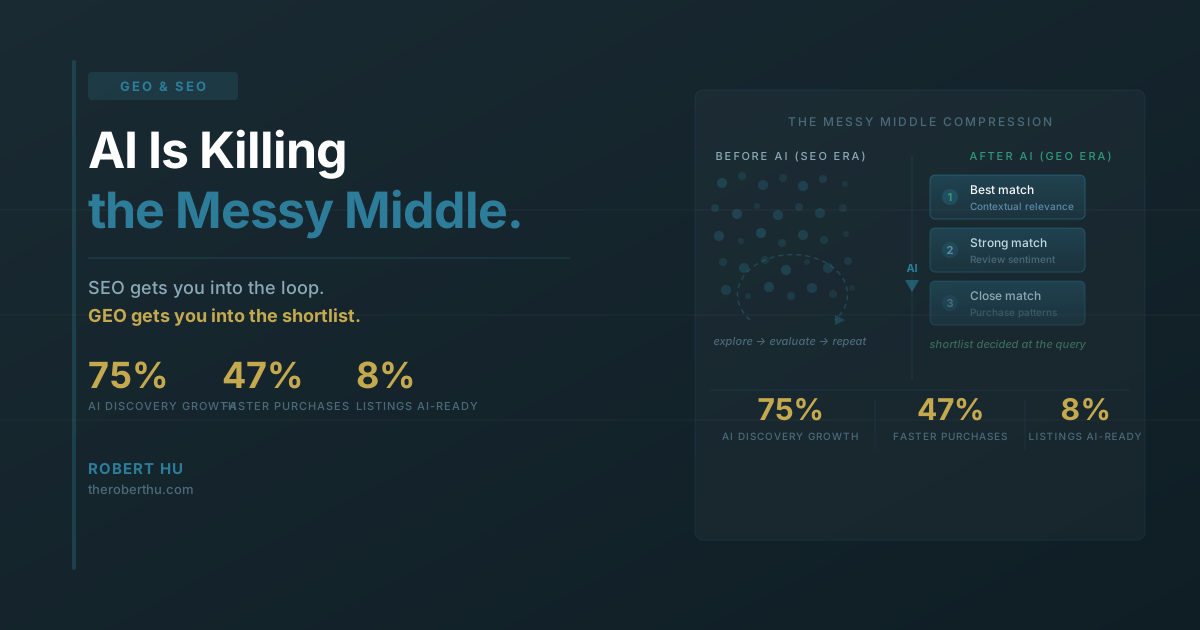
This is what happens when AI compresses the discovery phase without eliminating consideration. A shopper who browsed 48 search results, opened 6 tabs, and evaluated 3 product pages eventually gets decision fatigue. Half the time they downgrade to the cheapest option or abandon. A shopper who told an AI what they needed and got 3 curated recommendations arrives at the product page already 80% convinced. They finish the purchase with higher confidence, at a larger basket size, because the discovery work already happened.
Robert Hu has been describing this as the compression of the messy middle. AI is eliminating the evaluation phase that used to give every product a fair shot. The shoppers who arrive at your product page via AI are different from the ones who arrive via Google. They're further down the funnel, more committed, and more valuable per visit.
The Invisible 34%: What AI Can't Read
Adobe's most actionable finding is the visibility gap. Roughly 34% of content on retailer homepages is invisible to AI models. Product pages fare slightly better at 66% average visibility. Top retailers hit 82.5% visibility. The bottom tier sit at 54.2%.
What makes content "invisible" to AI? Usually one of four things:
- Critical info locked in images. If your product specs, features, or use cases live in an infographic but never appear as text, AI crawlers can't parse them.
- Vague marketing copy. "Premium quality, trusted by professionals" tells AI nothing about who the product is for, when to use it, or why it matters.
- Missing structured data. Backend attributes, schema markup, and category metadata are how AI narrows recommendations. Empty fields mean missed matches.
- Inconsistent information across channels. When your product description on walmart.com says one thing and your DTC site says another, AI systems cross-reference and deprioritize you when inconsistency creates ambiguity.
The 34% that's invisible to AI is also the 34% that won't get recommended by Rufus, Sparky, ChatGPT, or Gemini. You can have a best-selling product and still be invisible if your listing data isn't AI-readable.
The Q4 Timeline: Why Shoppers Are a Year Ahead of Brands
Here's the pattern worth understanding. Shoppers adopted AI shopping faster than brands adapted their listings. Adobe's data shows the shopper side of the curve has already shifted. AI-referred visits are now the highest-converting, highest-engagement traffic source many retailers have. But most brand listings were written in 2022 or 2023, when the shopper still arrived via keyword search.
The brands that haven't updated their content for AI readability are running pre-AI listings into post-AI traffic. The conversion rate is still good because the AI-referred shopper is pre-qualified. But the brands that show up at all are capturing a disproportionate share. The ones that don't show up aren't underperforming. They're invisible.
Q4 2026 is when this dynamic will be most obvious. Holiday 2025 already saw 693% AI traffic growth. Holiday 2026 will be bigger. Sellers who optimize in April have 6 months of data to refine before peak. Sellers who wait until September will be optimizing during the moments they most need to be performing.
What Does "AI-Visible" Actually Mean for Your Listings?
AI-visible listings share four characteristics. This is the Generative Engine Optimization framework applied to Adobe's findings:
WHO is this product for? Not "everyone." Specify age range, lifestyle, skill level, skin type, occasion, or use-case persona. AI assistants match shopper profiles to product descriptions. Vague targeting means vague matches, which means no recommendation.
WHEN do they use it? Morning routine, post-workout, weekly maintenance, seasonal, travel, before bed. Temporal context helps AI connect your product to situational queries like "what should I use before a run" that keyword search never captured.
WHERE do they use it? Home, gym, office, outdoors, car, kitchen counter. Location context narrows recommendations to the right product for the right environment.
WHY is this the right choice? Not features. Outcomes. "Reduces joint inflammation after long runs" beats "contains turmeric and ginger" because it answers the shopper's stated problem, not just an ingredient list.
These four dimensions are the difference between a listing AI can confidently recommend and one it skips. Adobe's 34% invisible number is what happens when listings answer only "what is this" and skip the rest.
7 Best Optimizations to Make Before Q4
Here's the tactical list, based directly on what Adobe's data reveals:
1. Audit your top 10 SKUs for the WHO/WHEN/WHERE/WHY framework. Pull up each listing. Score it on whether an AI crawler could find clear answers to each dimension. Any gap is a fix. This is the fastest way to move listings from invisible to recommended.
2. Extract text from any image-locked information. If your product specs, dimensions, or use cases only appear in lifestyle images or infographics, rewrite them into bullet points and A+ content text. AI crawlers read text. Images are invisible without alt text, and alt text alone isn't enough context.
3. Complete every backend attribute field. Material, weight, age range, dietary attributes, compatibility, certifications. Sparky-driven sales are up 35% AOV. Those recommendations come from structured data, not keyword density.
4. Rewrite bullet points as answers to specific questions. Go to your Q&A section. Look at what shoppers actually ask. Rewrite your bullets to answer those questions directly. "Is this safe for sensitive skin?" should be answered in a bullet, not left for a stranger in Q&A.
5. Add mood and context language to your content. AI-referred shoppers arrive with intent like "something warm for a slow morning" or "a gift for my 7-year-old niece." Your content needs that emotional and situational vocabulary. This is what Macy's learned with their 4.75x spending lift from AI users.
6. Check cross-platform consistency. If your Amazon listing says one thing and your DTC site says another, AI systems cross-reference and deprioritize you. Make sure product descriptions, attributes, and positioning align across every channel.
7. Track AI-referred traffic separately. Set up segmentation in Google Analytics (or your analytics tool) to track traffic from AI referrers separately from standard organic and direct. You need 60 to 90 days of data before Q4 to know which optimizations are working.
A Quick Checklist for Auditing Your Own AI Visibility
Before you close this tab, run your top-selling product through this 5-minute check:
- Ask ChatGPT or Rufus for the "best [your category] for [specific persona]." Does your product appear in the top 3? If not, your visibility is lower than you think.
- Open your listing and count the distinct personas it addresses by name. If the answer is zero, that's your first gap.
- Read your first bullet point out loud. Is it an answer to a shopper question, or a feature dump? Answers win.
- Pull up your A+ content. Can a screen reader (or AI crawler) extract the use-case context, or is it all locked in images?
- Check three backend attribute fields you assume are filled. Are they actually complete? Most sellers have 30 to 40% empty fields they don't realize.
Each gap you find is measurable lost traffic at Q4 scale.
The Bigger Picture
Adobe's Q1 2026 report is the first data set that makes AI commerce undeniable. 393% growth. 42% higher conversion. 37% more revenue per visit. And 34% of retailer content invisible to the systems driving that growth.
The brands that optimize now will compound their advantage every week between here and Black Friday. The brands that wait until Q3 will be optimizing during peak season, when the cost of mistakes is highest and the time to recover is shortest. Robert Hu has been telling the brands he works with that listing optimization is not a project, it is a discipline. Adobe's data is the strongest quantitative case for that view we've seen.