Update (April 4, 2026)
Perplexity has appealed the injunction and a federal court stayed the ban, temporarily allowing Comet back on Amazon while the case proceeds. Perplexity argues users access Amazon through Comet the same way they'd use any browser. Amazon has until April 22 to respond. The real fight is about who controls AI-powered product discovery and Amazon's $68.6 billion ad business. We'll update this post as the case develops.
Amazon did two things this week that look contradictory but aren't. It won a court order blocking Perplexity's Comet AI browser from shopping on Amazon. And it opened Shop Direct to hundreds of thousands of external merchants who want their DTC catalogs visible inside Amazon search and Rufus recommendations. Same week. Two moves. One strategy.
If you're a brand selling on Amazon or running a DTC store, understanding what Amazon is actually building here simplifies your entire AI commerce strategy. Stop chasing every AI agent. Focus on the one that matters inside the marketplace.
Key Takeaways
- Amazon blocked Perplexity's Comet browser from shopping on Amazon, citing unauthorized bot activity and the risk of AI agents generating fake ad impressions on sponsored listings.
- In the same week, Amazon expanded Shop Direct to 400,000+ merchants, inviting DTC catalogs directly into Amazon search and Rufus AI recommendations.
- The pattern is consistent: Amazon is building a closed AI commerce ecosystem where Rufus is the only approved AI shopping agent inside the marketplace.
- For sellers, this simplifies strategy: inside Amazon, optimize for Rufus. Outside Amazon, use Shop Direct feeds and GEO for your DTC site. Clean product data wins in both.
What Happened This Week?
Amazon secured a court order blocking Perplexity's Comet browser from placing orders on its platform. The complaint wasn't limited to unauthorized access. Amazon specifically flagged the risk of AI bots generating fake ad impressions: automated agents clicking sponsored listings without any human buyer behind those clicks. That's a direct threat to the integrity of Amazon's advertising ecosystem, which is one of its fastest-growing and most profitable businesses.
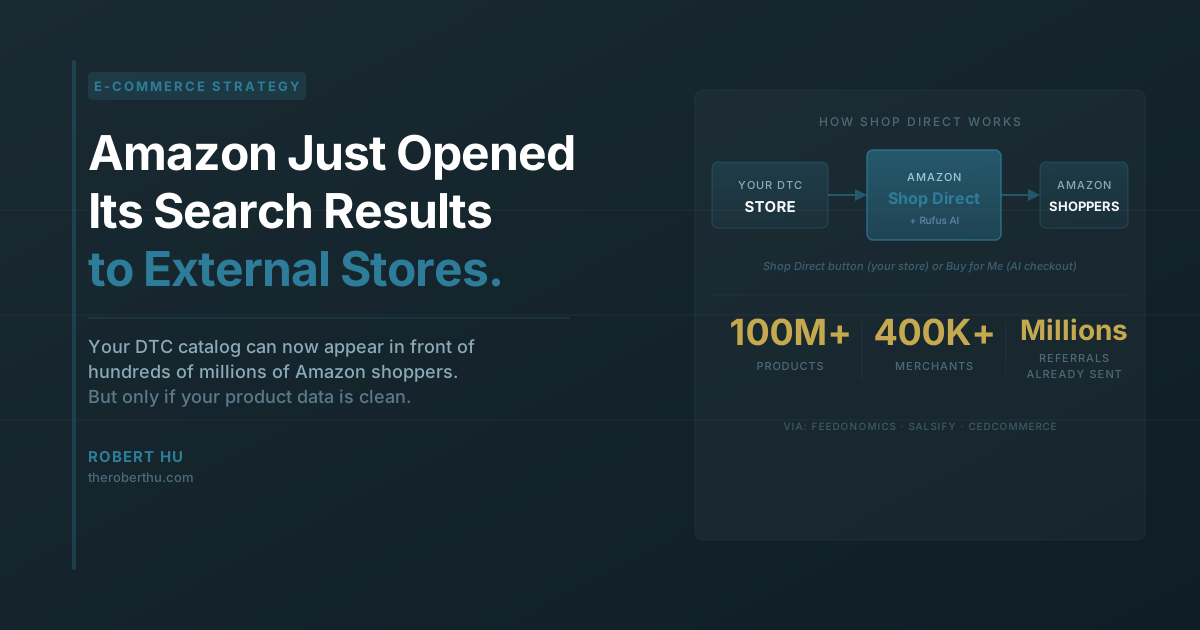
In the same week, Amazon expanded its Shop Direct program, announced March 11, 2026. Merchants can now push their DTC product catalogs through Feedonomics, Salsify, or CEDCommerce to appear in Amazon search and Rufus AI recommendations without selling on the marketplace. The program already includes 100M+ products from 400,000+ merchants, with millions of customer referrals already sent to external stores.
These two moves look opposite. One closes a door. One opens a door. But they're both the same door.
Newsletter
Follow the research
Research notes and analysis on how AI, digital transformation, product discovery, and customer behavior are changing commerce.
Subscribe to Hu's Weekly HootWhy These Moves Tell the Same Story
Amazon isn't anti-AI. It's building a controlled AI commerce ecosystem where every interaction goes through infrastructure Amazon owns, measures, and monetizes.
The Perplexity block is the enforcement arm of that strategy. External AI agents navigating Amazon's marketplace without Amazon's coordination are a threat in two specific ways: they bypass Amazon's ad attribution model, and they create unpredictable transaction patterns that break the data integrity Amazon's pricing and inventory systems depend on. An AI agent clicking a sponsored listing to scrape price data (without any human intent to buy) inflates CPC costs for every seller running PPC on that term.
Shop Direct is the infrastructure arm of the same strategy. Instead of letting external AI agents access Amazon products unpredictably, Amazon invites merchants to bring their products into Amazon's discovery layer on Amazon's terms: through approved feed partners, surfaced by Amazon's own AI (Rufus), completed by Amazon's own agent (Buy for Me). The message to every external AI company is consistent: you don't get to shop on Amazon through your own tools. But Amazon's tools will reach outside Amazon's marketplace when Amazon decides that's appropriate.
Amazon's Walled Garden for AI Commerce
What Amazon is building is a closed AI commerce ecosystem with intentional entry and exit points. The architecture is clear:
- Entry point for external products: Shop Direct (merchants bring DTC catalogs in through approved feed partners)
- Discovery and recommendation: Rufus AI (the only approved AI shopping assistant inside Amazon's search environment)
- AI-powered purchasing: Buy for Me (Amazon's own agent, completing external store purchases through Amazon's infrastructure)
- Blocked: every other AI agent trying to autonomously shop or interact with Amazon's marketplace
This isn't new territory for Amazon. It's the same closed platform logic Amazon has always applied: build a dominant consumer surface, control who accesses it, and monetize the access. What's new is that AI agents have become the access point Amazon needs to control.
The Advertising Angle Sellers Are Missing
The Perplexity block specifically cited fake ad impressions from AI bots. That detail matters more than the headline suggests.
Amazon's advertising revenue has become one of its most important business lines. If AI bots are clicking sponsored listings without any human purchase intent behind those clicks, that's direct fraud against every seller paying for PPC. A seller targeting a high-value keyword at $3.00 CPC pays that cost whether the click came from a real buyer or an AI agent scraping the page. Amazon has every financial incentive to eliminate unauthorized bot activity, and this lawsuit is as much about protecting the ad ecosystem as it is about controlling the shopping experience.
For sellers: the integrity of Amazon's ad platform is directly tied to how tightly Amazon controls who interacts with it. The more Amazon can ensure that every ad click represents a real buyer with real intent, the more reliable your PPC metrics become and the more accurate your bid decisions are.
Why Sellers Should Stop Chasing Every AI Agent
The instinct I see in a lot of brands right now is to optimize for everything at once: ChatGPT Shopping, Perplexity, Google AI Overviews, Rufus, and every emerging AI discovery surface. That instinct is understandable but it's fragmenting effort and budget that would generate far better returns when focused.
Robert Hu's position on this: inside Amazon, there is one AI agent that matters for product discovery, and Amazon has now made it structurally clear that no external AI agent gets meaningful, authorized access to its shopping environment. Optimizing for Rufus inside Amazon's marketplace is not a hedge. It's the entire game. Every hour spent trying to optimize Amazon listings for Perplexity or ChatGPT is an hour not spent on the content signals that actually drive Rufus placements.
Amazon Rufus optimization is where the ROI lives for any brand selling on the marketplace. The AI commerce walled garden Amazon is building makes that even more true, not less.
The Shop Direct Opportunity for Dual-Channel Brands
For brands operating on both Amazon's marketplace and a DTC store, Shop Direct is the bridge Amazon is explicitly inviting you to use. Your DTC catalog can appear in Rufus recommendations and Amazon search results without listing those products on the marketplace or paying referral fees on those transactions.
The setup requirement is real: your DTC catalog needs clean, structured product data to surface well in Rufus. The same GEO discipline that helps your marketplace listings rank in AI search applies directly to the feed you push through Feedonomics, Salsify, or CEDCommerce. Vague titles and thin descriptions don't earn Rufus placements regardless of the channel. See what the broader AI shopping pullback means for brands trying to get discovered across multiple platforms.
The effective approach for marketplace sellers is catalog segmentation. Keep core marketplace products on Amazon with fully optimized listings. Use Shop Direct for products sold exclusively through your DTC store: items with margins too thin for marketplace fees, limited editions, or products you've intentionally held back from the marketplace.
What Both Moves Have in Common: Clean Product Data Wins
Whether you're selling on Amazon's marketplace, connecting a DTC catalog through Shop Direct, or trying to appear in AI search outside of Amazon, the underlying currency is identical: structured, specific, context-rich product data.
Rufus doesn't surface vague products. Buy for Me can't complete purchases efficiently for products with incomplete attribute data. External AI agents, when they have legitimate access, use the same structured data signals to determine what to recommend. The brands that invested in product listing optimization before this AI commerce moment arrived are the ones with the compounding advantage right now. Their data already works for AI-powered discovery. Everyone else needs to rebuild before they can benefit from any of these channels effectively.
Amazon's walled garden strategy makes the optimization priority crystal clear: inside the marketplace, Rufus is the target. Outside the marketplace, your DTC data quality determines whether Shop Direct or any other AI discovery surface can surface your products at all. Both paths reward the same investment.
Frequently Asked Questions
Why did Amazon block Perplexity's AI shopping bot?
Amazon blocked Perplexity's Comet browser from shopping on its platform, citing unauthorized bot activity and the risk of AI agents generating fake ad impressions on sponsored listings. The court order reflects Amazon's broader strategy of controlling which AI agents interact with its marketplace and protecting the integrity of its advertising ecosystem.
What is Amazon Shop Direct and how is it different from selling on Amazon?
Amazon Shop Direct lets merchants sync their DTC product catalogs to appear in Amazon search results and Rufus AI recommendations without being Amazon marketplace sellers. Products are discovered on Amazon but purchased on the merchant's external website, or through Buy for Me where Amazon's AI agent completes the transaction using the customer's saved payment and address information.
Should I optimize my Amazon listings for Rufus or for external AI agents like ChatGPT?
Inside Amazon's marketplace, optimize exclusively for Rufus. Amazon has made it structurally clear that no other AI agent gets meaningful authorized access to its shopping environment. For your DTC site, GEO optimization for external AI agents still matters because tools like ChatGPT, Perplexity, and Google AI Overviews surface DTC products in contexts Amazon can't control. The two channels require different optimization approaches for different audiences.
What product data quality do I need to appear in Amazon Rufus or Shop Direct?
Both Rufus and Shop Direct reward the same thing: structured, specific product data with clear titles, complete attributes, benefit-focused descriptions, and accurate real-time inventory information. Vague product data does not surface well in AI-powered discovery regardless of whether it comes from marketplace listings or a DTC feed connected through Shop Direct.