Amazon's Shop Direct program just put your DTC catalog inside Amazon search results and Rufus AI recommendations, without requiring you to sell on Amazon's marketplace at all. This is a real structural change to how Amazon's product discovery works, and the brands positioned to benefit are not the ones who move fastest. They're the ones with the cleanest product data.
If you're a brand doing $100K to $2M selling on both Amazon and your own site, this changes what's possible. Your Shopify catalog can now appear in front of Amazon's hundreds of millions of shoppers. But not automatically, and not for every brand.
Key Takeaways
- 100M+ products from 400,000+ merchants are already inside Amazon Shop Direct. This is a live program at real scale, not a pilot.
- Two purchase paths exist for every Shop Direct product: a direct link to your store, or Buy for Me where Amazon's AI completes the transaction using saved payment info.
- Rufus surfaces products by structured data quality, not keyword density. Thin DTC product feeds will not perform regardless of how fast you connect them.
- Already selling on Amazon's marketplace? Shop Direct works best when you segment: keep marketplace products on Amazon, use Shop Direct for your DTC-exclusive catalog.
What Did Amazon Just Launch?
Amazon's Shop Direct program lets merchants push their external product catalogs into Amazon's search experience through established feed management platforms: Feedonomics, Salsify, and CEDCommerce. Products appear in standard Amazon search results and inside Rufus AI recommendations. Customers discover them on Amazon but complete purchases elsewhere, unless they use Buy for Me.
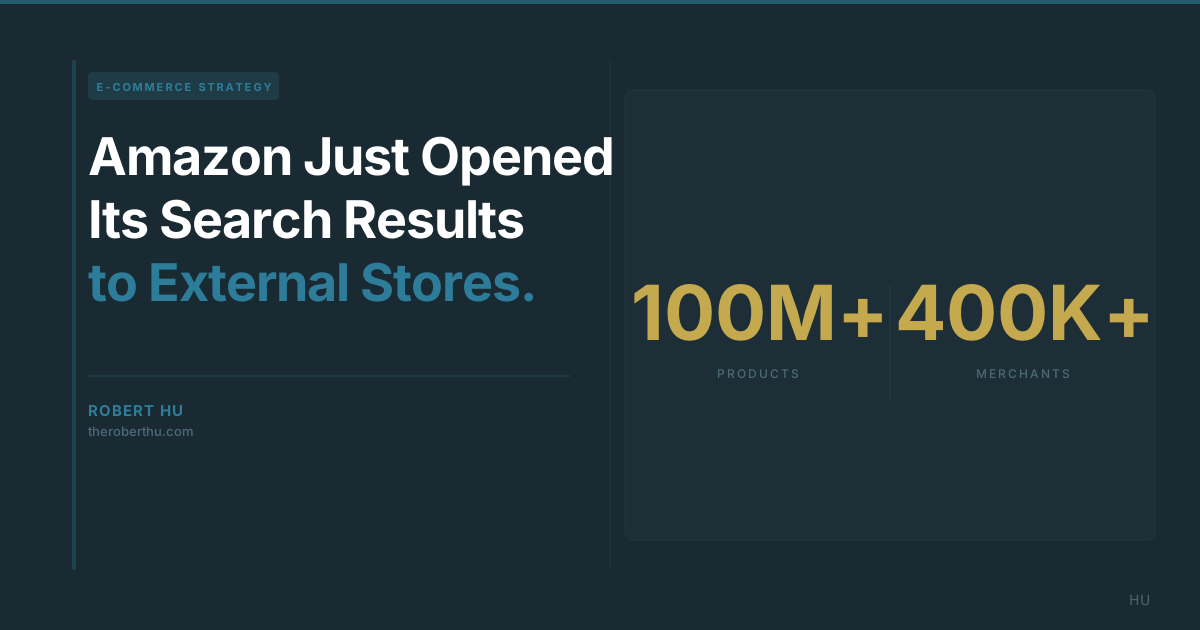
This is not a new third-party seller program. Merchants using Shop Direct are not selling on Amazon's marketplace and are not paying referral fees on each transaction. Amazon is acting as a discovery and referral layer, directing qualified buyers to external stores. Amazon announced the program on March 11, 2026, with the numbers already substantial: over 100 million products from more than 400,000 merchants, with millions of customer referrals already sent to external stores.
Newsletter
Follow the research
Research notes and analysis on how AI, digital transformation, product discovery, and customer behavior are changing commerce.
Subscribe to Hu's Weekly HootHow Does Shop Direct Work for Customers?
When a customer finds a Shop Direct product, they see two options. The Shop Direct button takes them to the merchant's website to complete the purchase. Buy for Me takes a different approach: Amazon's AI agent completes the transaction on the customer's behalf using their saved address and payment method, without the customer leaving Amazon.
That second option deserves attention. An AI completing purchases from external sites using saved Amazon credentials is a meaningful trust bridge. A customer who would never have sought out your DTC store on their own may buy from it because Amazon's infrastructure removes both the discovery friction and the checkout friction. For DTC brands, that trust transfer is significant: you get Amazon's social proof and discovery infrastructure without carrying Amazon's fee structure.
The program is available in the US across Amazon.com, the Amazon Shopping app, mobile web browsers, and Rufus.
Why Does This Matter for Dual-Channel Brands?
The opportunity here is structural. If you sell on Amazon's marketplace AND operate a Shopify store, your DTC catalog already exists. Shop Direct turns that existing catalog into Amazon-facing inventory without the marketplace fee structure on those transactions.
Robert Hu's perspective after 20+ years watching the channel strategy debate: the recurring mistake is treating Amazon and DTC as competitors for the same customer. Shop Direct rewrites that equation. Amazon now functions as a discovery and referral layer for your DTC business, not just as a marketplace to list on. For brands that have stayed all-in on Amazon's marketplace because the built-in audience was too valuable to risk splitting, Shop Direct creates a path to build the DTC channel using Amazon's traffic rather than against it.
The brands that benefit most from Shop Direct are the ones that already treat their product content as a strategic asset. If your DTC product titles are vague, your descriptions thin, and your attributes incomplete, Rufus won't surface them. The feed quality requirements are real, and most DTC product data doesn't meet them out of the box.
What Is the Data Quality Requirement for Shop Direct?
The data quality bar for Shop Direct is the same standard that determines visibility in Rufus AI recommendations. Rufus surfaces products based on semantic understanding of what the product is, what it does, who it's for, and how it fits a specific search context. It does not rely on keyword matching the way traditional search does.
A DTC product title like "Blue Jacket Men's" tells Rufus almost nothing. A title like "Lightweight Packable Down Jacket for Travel | Men's | Insulated to 20F" gives Rufus what it needs to surface the product when a customer is searching for travel layering options for cold weather.
The same GEO optimization discipline that helps Amazon marketplace listings rank in AI-powered search now applies directly to your DTC catalog feed. Vague product data does not rank in AI-powered discovery regardless of which channel it comes from. If you've already optimized your Amazon listings for Rufus, you understand the standard. Apply that same logic to the DTC feed you're syncing through Feedonomics, Salsify, or CEDCommerce.
If you haven't audited your DTC product data against AI readability standards, see how product listing optimization applies to both marketplace and DTC catalog quality. And see how Amazon Rufus optimization works in practice to understand the specific content signals that drive Rufus placements.
Is Shop Direct Right for Your Brand?
Not every brand should rush to enable Shop Direct. The program creates real benefits but also introduces complexity that not every brand is ready to manage.
Shop Direct is worth evaluating if:
- You sell on Amazon's marketplace AND have a DTC store with at least 20 products that don't overlap with your Amazon catalog
- Your DTC store has its own brand identity and customer experience that justifies the handoff from Amazon discovery to external purchase
- You have the infrastructure (or a feed management partner) to sync real-time pricing and inventory data accurately
Shop Direct is not worth pursuing yet if:
- Your DTC product data is vague or incomplete (fix that first, then connect)
- You don't have real-time inventory and pricing sync in place (a mismatch between what Amazon shows and what your store sells will kill conversion)
- Your only goal is improving your Amazon marketplace performance (Shop Direct is for external catalog discovery, not marketplace optimization)
What If You're Already Selling on Amazon's Marketplace?
The question I keep getting: does Shop Direct cannibalize Amazon marketplace sales?
The honest answer is only if you misuse it. Pushing the same products that are already live on Amazon's marketplace into Shop Direct means competing with yourself. A customer who might have converted on Amazon (paying you after referral fees) might instead click Shop Direct and buy on your DTC site. That sounds like a margin improvement, but Amazon's algorithm notices when referrals don't return to the marketplace, and that has implications for how your marketplace listings are treated.
The smarter approach is catalog segmentation. Keep your core Amazon marketplace products on Amazon, fully optimized for search and conversion. Use Shop Direct for products you sell exclusively through your DTC store: items with margins too thin for Amazon's fee structure, limited editions, bundles, or products you've deliberately kept off the marketplace. That separation gives Shop Direct the role it's designed to play: sending qualified Amazon shoppers to DTC products they can't find on the marketplace, without creating internal channel competition.
See the e-commerce strategy framework for how to structure dual-channel catalog decisions that make this segmentation practical at the $100K to $2M revenue level.
Frequently Asked Questions
What is Amazon Shop Direct?
Amazon Shop Direct is a program that lets merchants sync their DTC product catalogs to appear in Amazon search results and Rufus AI recommendations without selling through Amazon's marketplace. Customers discover products on Amazon and either click through to the merchant's website or use Buy for Me, where Amazon's AI completes the purchase using saved payment and address information.
Do I need to sell on Amazon to use Shop Direct?
No. Shop Direct is specifically designed for brands selling through external stores, not Amazon's marketplace. You connect your catalog through Feedonomics, Salsify, or CEDCommerce, and products appear in Amazon search without going through the marketplace seller process or paying referral fees on each transaction.
What product data quality does Shop Direct require?
The same standard Amazon's Rufus AI uses for marketplace listings: structured, specific titles; complete attribute data; accurate real-time inventory and pricing; and benefit-focused descriptions. Vague or thin product data will not surface well in Rufus recommendations. Treat your DTC product feed with the same discipline you'd apply to an optimized Amazon marketplace listing.
Does Shop Direct cannibalize existing Amazon marketplace sales?
Only if you use it incorrectly. The effective approach is catalog segmentation: keep your core marketplace products fully optimized on Amazon, and use Shop Direct for products you sell exclusively through your DTC store. Running the same products through both channels simultaneously creates internal competition and can dilute performance in both.