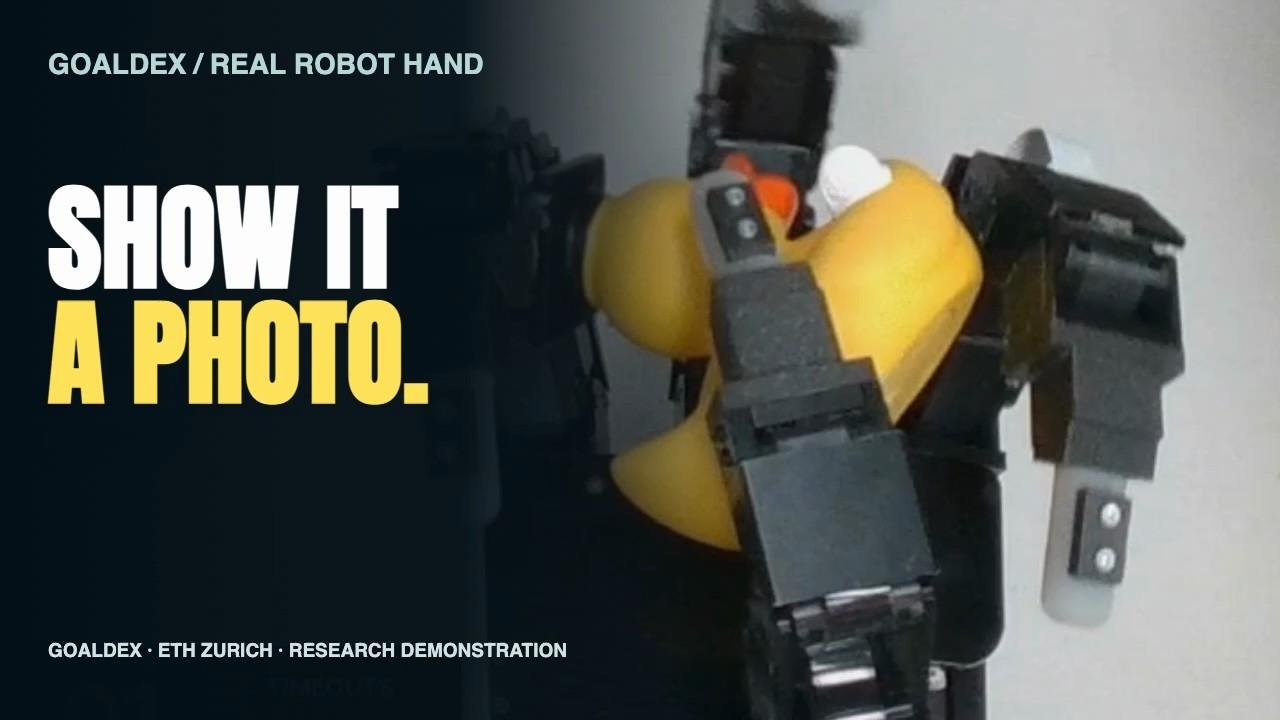
Watch this robot wipe a metal bar. On the physical machine, a support shifts and the sponge loses contact.
Now imagine the robot’s practice world had one impossible advantage: the bar could not move. That was a real problem in a research pilot from UC Berkeley and NVIDIA. The original simulation held the bar’s supports fixed, so the world the machine practiced in was missing a rule that mattered.
A practice world from a phone video
The researchers started with a smartphone video of a robot wiping a marker stripe off a bar with a foam sponge, with no CAD models or calibrated cameras. Off-the-shelf coding agents used a toolkit called RoboSimStudio to build a simulated version of the scene in about an hour. The paper reports that one agent built and verified a simulated wipe in 56 minutes.
Making the scene look right was only part of the job. The sponge had to bend, make contact and produce forces. A convincing picture of a sponge is not the same thing as a useful model of one.
Improving the simulated wipe
Inside the simulation, the researchers varied the sponge’s stiffness and generated 30 layouts of the bar and sponge. A separate system called Graph-as-Policy used feedback from those runs to improve the wiping program, and the paper reports the simulated wiped area rising from 0% to 100% over 14 iterations.
That number belongs to the simulated task. It is not a 100% success rate for real robots.
What the hardware exposed
The improved program did complete the wipe on the physical robot. But one real-world attempt exposed the missing constraint: the wiping motion pushed a bar support out of place, and the sponge lost contact. In the simulation, the supports stayed fixed. In the lab, they did not.
Fixing the missing rule
Given the failure video and a description of what went wrong, the coding agent identified that the original simulation fixed the bar supports to the environment. It replaced that fixed constraint with a free rigid body, so the bar and its supports could move when pushed. The revised model reproduced the bar shifting and tipping when the sponge pressed hard enough or wiped away from the bar’s center.
That is the useful twist. A failure in the real world became evidence about what the virtual world had left out.
What this pilot proves
This was one hardware task, and the paper says the match between simulated and real behavior was assessed mainly through qualitative observation. It does not establish a general household robot, and it does not show that future failures are eliminated. Robots that leave the lab still need a plan for the moments the model is wrong, as 1X’s NEO and its human backup shows.
What to ask of a robot demo
Next time a robot demonstration looks convincing, ask what its practice world left out.
My takeaway: the result worth noticing is not the 100% simulated score. It is that one failed wipe was turned into a better model of the world.
Chapters
Each chapter opens the video on YouTube at that moment.
Sources
The three sources cited in the video. The paper and project page come from the research team, and the Berkeley News story is the university’s own coverage. None is an independent replication, and the paper evaluates a single hardware task.
Watch the full documentary
2 min 20 sec on YouTube.
Written by Robert Hu; narration uses his authorized AI voice clone. Footage and analytical figures: selected muted excerpts and figure details from the UC Berkeley and NVIDIA RoboSimStudio research (2026), directly analyzed, with simulation and paper figures labeled. Case-specific commentary, not a footage license. Thumbnail: editorial composite using Robert’s real portrait and an illustrative treatment of a research frame. Music: “Machina” by Scott Buckley, CC BY 4.0. Independent analysis; not an endorsement or a research partnership.