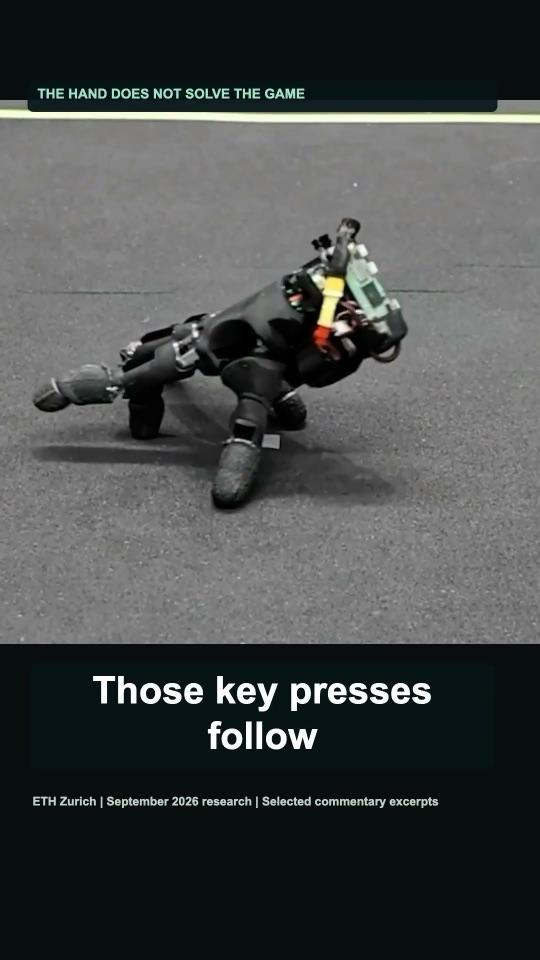
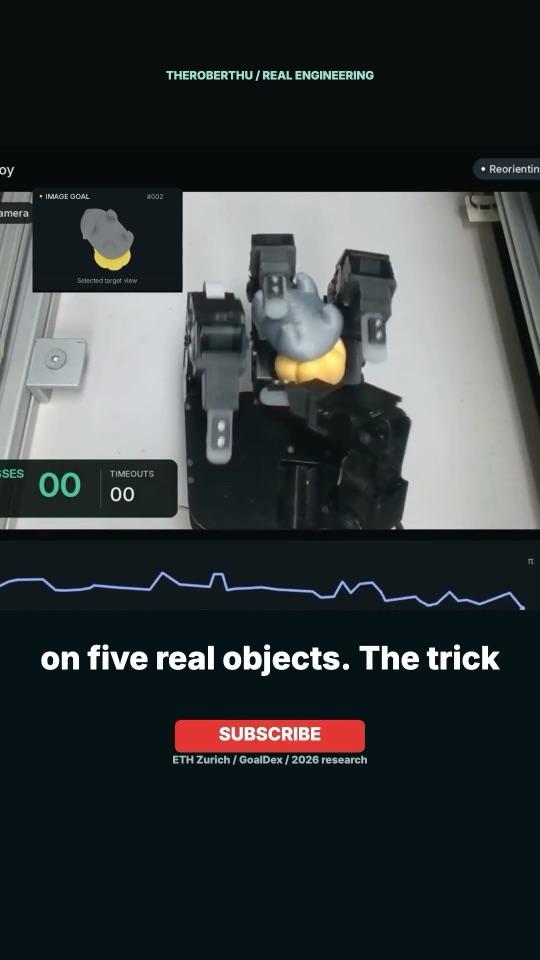
Show this robot a picture, and it turns the object in its hand to match. That is a real rubber duck moving between real robot fingers, and the small image in the footage is the target.
The clever part is how the robot gets there. The catch is how it decides it is done.
Why turning an object is hard
Try turning something in your own hand without putting it down. Every finger movement changes what you can see. Your fingers hide the object, then uncover a different side.
That creates a problem for a robot that first tries to calculate exactly how an object is positioned before deciding how to move it. Tracking an object’s position is hard when the hand keeps covering what it holds.
A picture instead of coordinates
ETH Zurich researchers, working with NVIDIA, tested a different route called GoalDex. The controller receives the current camera image, information about its own joints and a picture of the desired orientation, and turns those inputs into finger movements without a separate object pose estimator.
The request is not simply to hold the object. It is to turn a particular side toward the camera. The controller was trained in simulation and transferred to a real robot hand, and one policy handled five tested objects: a cube, a 3D printed toy, a tablet bottle, a rubber duck and a globe.
A prediction is not a verification
The green border in the demonstration footage marks a success prediction. That word matters. A prediction still needs checking.
In the researchers’ hardware evaluation, GoalDex succeeded in 80 of 100 trials, with 20 target images per object. The tablet bottle reached 13 of 20 and the cube 18. The strongest pose-based approach the researchers compared reached 27%. The most common failure was declaring success before the object was close enough to the goal. Those figures come from the paper’s evaluation, not from counting green flashes in an edited demonstration.
What it does not show
This is a research result on five tested objects, not proof that a robot can handle anything in your home. The paper notes that training covered 25 objects in simulation and does not yet generalize to entirely unseen object categories.
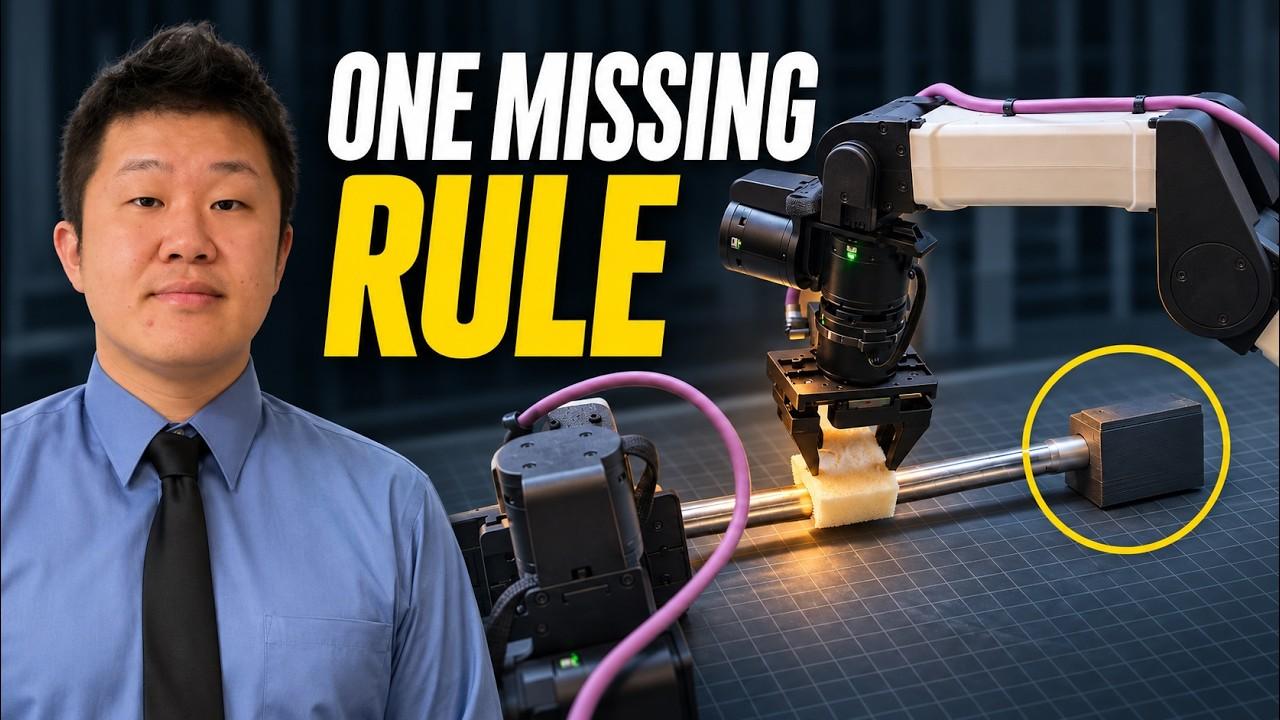
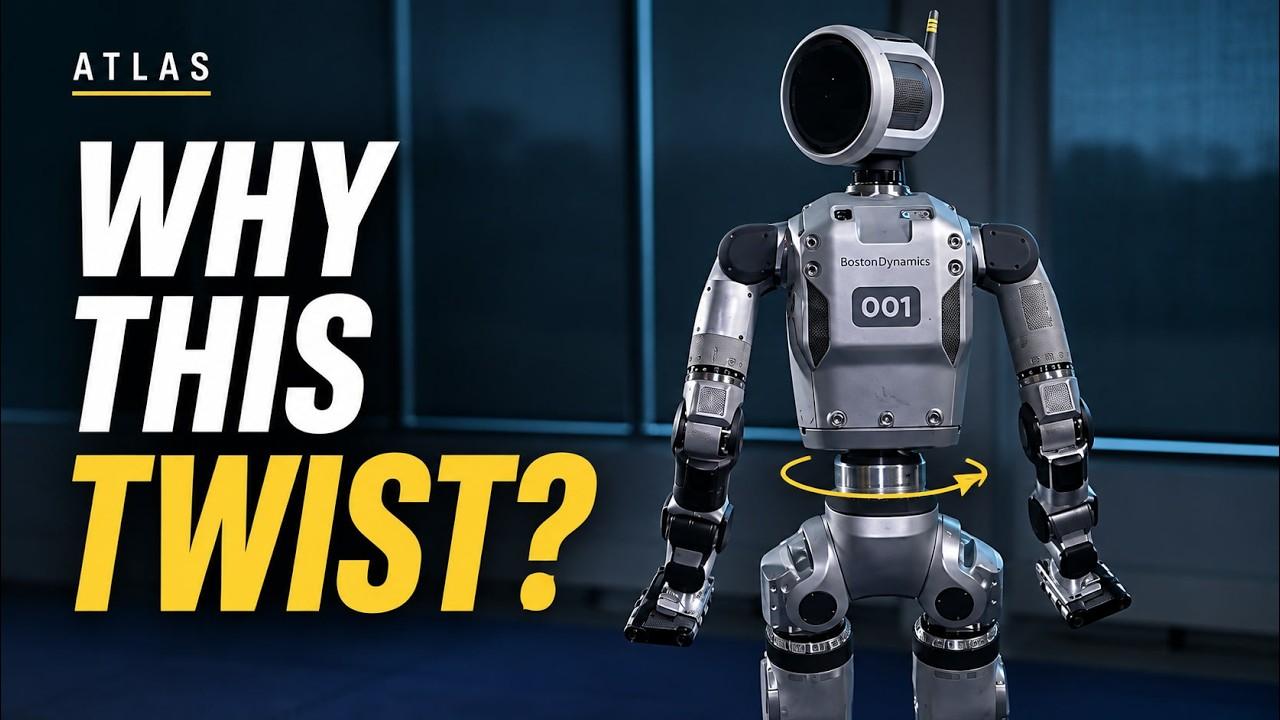
Bigger machines face the same question. As Atlas and the engine cover show, moving the arm is one problem, and knowing where the object actually ended up is another.
Whose version of done
The idea is still useful. Show a robot the result you want, then let it work toward that picture.
My takeaway: the next challenge is making sure the robot’s version of done matches yours.
Chapters
Each chapter opens the video on YouTube at that moment.
Sources
The paper and project page cited in the video. Both come from the research team. The per-object results and failure categories are from the paper’s hardware evaluation, not an independent test.
- GoalDex: Learning Image-Goal-Conditioned Policies for Dexterous In-Hand Manipulation (arXiv)November 1, 2026
- GoalDex project page (ETH Zurich, CoRL 2026)Checked November 13, 2026
Watch the full documentary
2 min 8 sec on YouTube.
Written by Robert Hu; narration uses his authorized AI voice clone. Footage: brief muted excerpts, crops and target-image insets from the GoalDex / ETH Zurich November 2026 research demonstration, directly analyzed with original commentary. Green signals in the footage are success predictions, not independent verification. No sponsorship or confirmed reuse license. Music: “Filaments” by Scott Buckley, CC BY 4.0. Independent analysis; not an endorsement or a research partnership.