Big brands have been outspending you for years. More ads, more reviews, more shelf space. They own the first row of sponsored results on Amazon and Walmart, and they've made it very clear that the price of visibility keeps going up.
AI doesn't care about any of that.
Key Takeaways
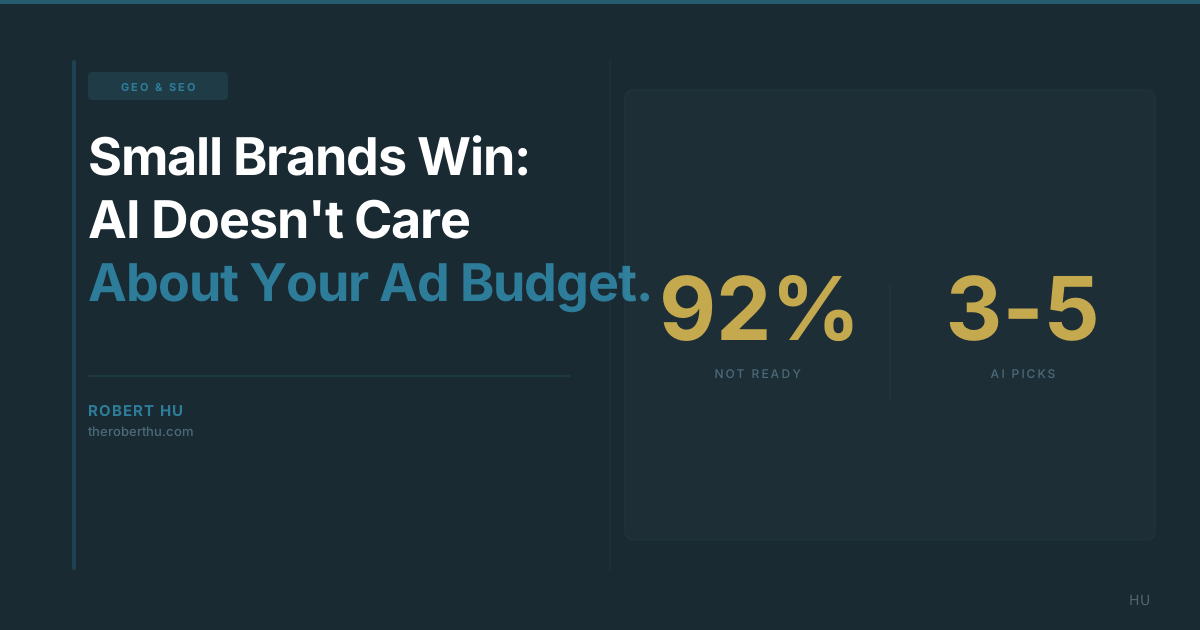
- 92% of sellers are missing the shift to AI-powered product discovery, where recommendations are based on listing quality, not ad spend.
- 3 to 5 products is what AI shopping assistants recommend per query, bypassing sponsored results entirely.
- WHO, WHEN, WHERE is the framework that separates listings AI can recommend from listings it ignores.
When Rufus on Amazon or Sparky on Walmart recommends a product, it isn't looking at who paid for the top sponsored slot. It's looking at product pages. It's scanning millions of listings, pulling information so it can answer the questions that real customers are asking in natural language. "I'm in my 40s, what type of hair gel do I need?" That's the kind of query AI shopping assistants are fielding right now.
The customer typing that question isn't getting a page of 48 results sorted by ad spend. They're getting three to five products that AI has determined are the best match for that specific person, that specific need, that specific moment. The sponsored line that big brands are spending big money on? AI is bypassing it entirely.
That's the opportunity. And 92% of sellers are missing it.
What Does AI Actually Look For on Your Listing?
Traditionally, product listings answer two questions: what the product is and why someone should buy it. That's table stakes. Every competitor in your category does that.
But AI shopping assistants need more than what and why. They need to build a profile of your product that's detailed enough to match it against conversational, personalized queries. That means your listing needs to answer three additional questions that most sellers have never thought about:
Who is this product for? Not "everyone." AI needs specificity. Age range, lifestyle, skill level, skin type, hair type, pet size, dietary restriction. The more precisely you define the buyer, the more confidently AI can recommend your product to the right person.
When should they use it? Morning routine, post-workout, seasonal, weekly maintenance, before bed, during travel. Temporal context helps AI match your product to situational queries that traditional keyword search never captured.
Where should they use it? At home, in the office, outdoors, in the shower, in the car, at the gym. Location context is another dimension that AI uses to narrow recommendations and increase relevance.
If your listing only tells AI what your product is, you're competing with everybody else in your category on the same generic terms. That's the traditional game, and the big brands win that game every time because they have the budget to outbid you.
But if your listing tells AI who it's for, when they should use it, and where they should use it, you're competing with almost nobody. Most sellers haven't made this shift yet. The window is open, but it's closing fast.
Newsletter
Follow the research
Research notes and analysis on how AI, digital transformation, product discovery, and customer behavior are changing commerce.
Subscribe to Hu's Weekly HootHow Do Small Brands Compete with Big Brands in AI Shopping?
This is what Generative Engine Optimization looks like in practice. It's not a mystery. It's not complicated. It's answering the questions that AI needs answered so it can do its job.
The WHO, WHEN, and WHERE framework works because it gives AI the structured context it needs to recommend your product in conversational shopping experiences. Without that context, AI has nothing to work with beyond the same generic product attributes that every other listing already provides.
Here's the practical move: go look at your listing right now. Check the bullet points, the product description, the A+ content, anywhere that text lives on your product page. Can an AI crawler find clear answers to who this product is for, when someone should use it, and where they should use it?
If not, you're leaving the door open for a competitor with a smaller budget and a better-optimized listing to get recommended over you. That's the new reality of AI-powered shopping, and it's already happening on Amazon and Walmart today.
The brands that win in AI-powered shopping aren't the ones with the biggest budget. They're the ones whose listings answer the questions that customers are actually asking.
Related: Amazon Organic Visibility Is Declining. Here's How to Fix Your Ad Strategy.