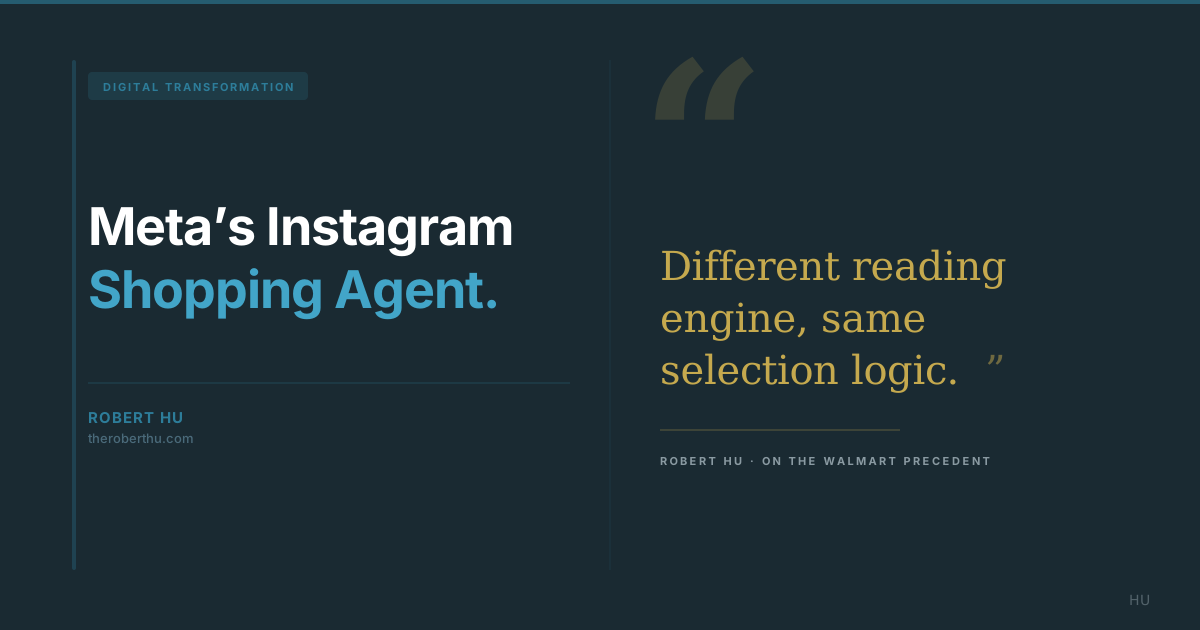
Meta is building two new agentic products. The first is Hatch, a consumer version of OpenAI's OpenClaw, designed to handle everyday tasks for billions of users. The second, reported by The Information on May 5, is an agentic shopping tool built directly into Instagram. The first one is interesting. The second one changes the math for marketplace sellers who have written off Instagram Shops as a low-conversion channel.
If Hatch can complete a purchase from an Instagram product tag without the buyer ever leaving the app, the conversion gap that has defined Instagram commerce for the last five years closes. The brands that have been ignoring Instagram because of poor conversion will have to revisit the channel. The brands that have been investing in Instagram product data are about to get rewarded.
Meta's reported 2026 capital expenditure forecast is $125 to $145 billion, much of it earmarked for AI infrastructure. The Instagram agent is one piece of that spend. It signals where Meta thinks the next surface for Agentic Engine Optimization actually lives.
Why Instagram's agentic shopping tool is the announcement that matters
Instagram Shops has historically failed marketplace sellers because the conversion path was broken. Buyers saw a product tag, tapped through, hit friction (slow load, missing details, broken checkout), and bounced. Brands quietly de-prioritized the channel. Traffic without conversion is not a channel. It is a vanity metric.
An agentic shopping tool collapses the conversion path entirely. The buyer asks the agent for "a sustainable workout shirt under $50 in size medium" while scrolling Reels. The agent reads the catalog, evaluates fit, and either completes the purchase inside Instagram or hands the buyer a one-tap checkout. The friction that killed Instagram Shops conversion is the friction the agent eliminates.
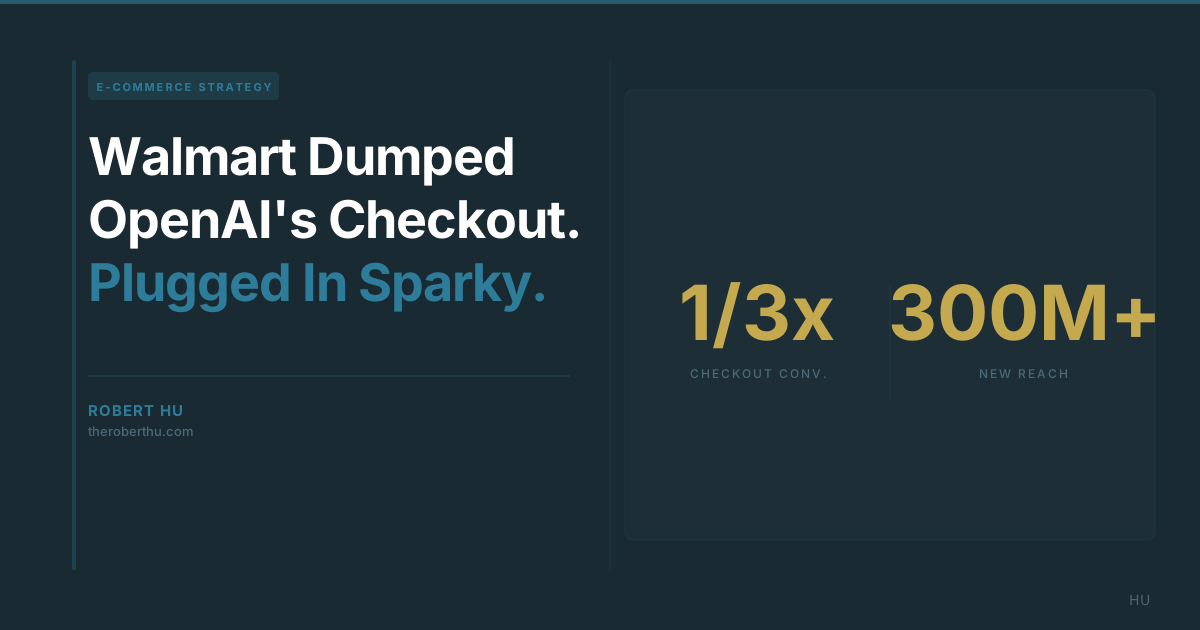
The Walmart precedent is the playbook. In March, Walmart pushed Sparky into ChatGPT and Gemini. Brands with clean structured catalogs got recommended immediately. Brands with messy data got skipped and lost share. Instagram's agent will follow the same pattern. Different reading engine, same selection logic.
Newsletter
Follow the research
Research notes and analysis on how AI, digital transformation, product discovery, and customer behavior are changing commerce.
Subscribe to Hu's Weekly HootWhat marketplace sellers should be auditing this week
The Instagram agent is in internal testing. Public volume is months away. The work that pays off is data-layer hygiene, and the brands that do it now will be ready when the volume lands.
- Your Instagram product catalog completeness. Every product tag you have ever published feeds the data layer that Instagram's agent will read. Missing attributes, broken image links, outdated pricing, and incomplete descriptions are the things that get a product passed over by an agent. Audit the catalog. Fix the gaps. Make sure your Instagram catalog matches your Amazon and DTC catalogs in attribute depth.
- Your Instagram caption and tag language. Captions that read as keyword-stuffed marketing copy get parsed as low-context noise. Captions that name the buyer, the use case, and the specific outcome get parsed as recommendation signals. The shift mirrors what is already happening on Rufus and Sparky.
- Your Instagram Shops checkout flow. If you are using Instagram's native checkout, audit it for any field that requires manual buyer input the agent cannot pre-fill. If you are routing checkout to your DTC site, the friction transfer kills the agent's ability to complete the purchase autonomously. Native checkout outperforms external checkout in agent-driven flows. Walmart's Sparky-in-ChatGPT integration is the proof point: the agent completes the purchase inside ChatGPT, not by routing to Walmart.com.
- Your tracking layer. Instagram does not yet differentiate agent-driven sessions from human-driven sessions in its analytics. When the volume shows up, brands without separate tracking will see a confused mix of metrics. Set up the measurement layer now so you can isolate agent-driven revenue when it starts to land.
The underlying discipline is the same one that drives the GEO foundation for marketplace surfaces. AEO sits on top of GEO. The data quality work compounds across every channel where an AI agent is making the recommendation decision.
What this announcement is not
This is not the moment to overhaul your entire Instagram strategy. Hatch is in internal testing. The Instagram shopping tool has not been demoed publicly. Volume from this channel will be near-zero for the next 6 to 12 months. The right move is data-layer hygiene, not strategic pivot.
This is also not a reason to abandon Amazon and Walmart optimization. Marketplace AI surfaces (Rufus, Sparky) drive meaningful revenue right now. Instagram's agent is a future channel. The brands that win will run all three plays in parallel: GEO on marketplaces today, AEO readiness across emerging surfaces this quarter, and tracking layer build-out before the volume arrives.
Closing
Hatch and the Instagram shopping agent are early signals that the agentic commerce layer is moving from theoretical to operational. Meta joins Walmart as the second major platform to publicly commit to building agent-completed shopping inside its own surface. Amazon is running a different version with Buy for Me, where the agent acts on the buyer side. Meta and Walmart are putting the agent on the platform side, which is the version that affects marketplace seller data quality directly. The platforms are not waiting for the standard to settle. They are building.
The brands paying attention to product data quality across every channel are the ones that compound through the transition. The brands waiting for the dust to settle will spend the second half of 2026 catching up. Agentic Engine Optimization is no longer a forward-looking concept. It is the work being lined up right now.